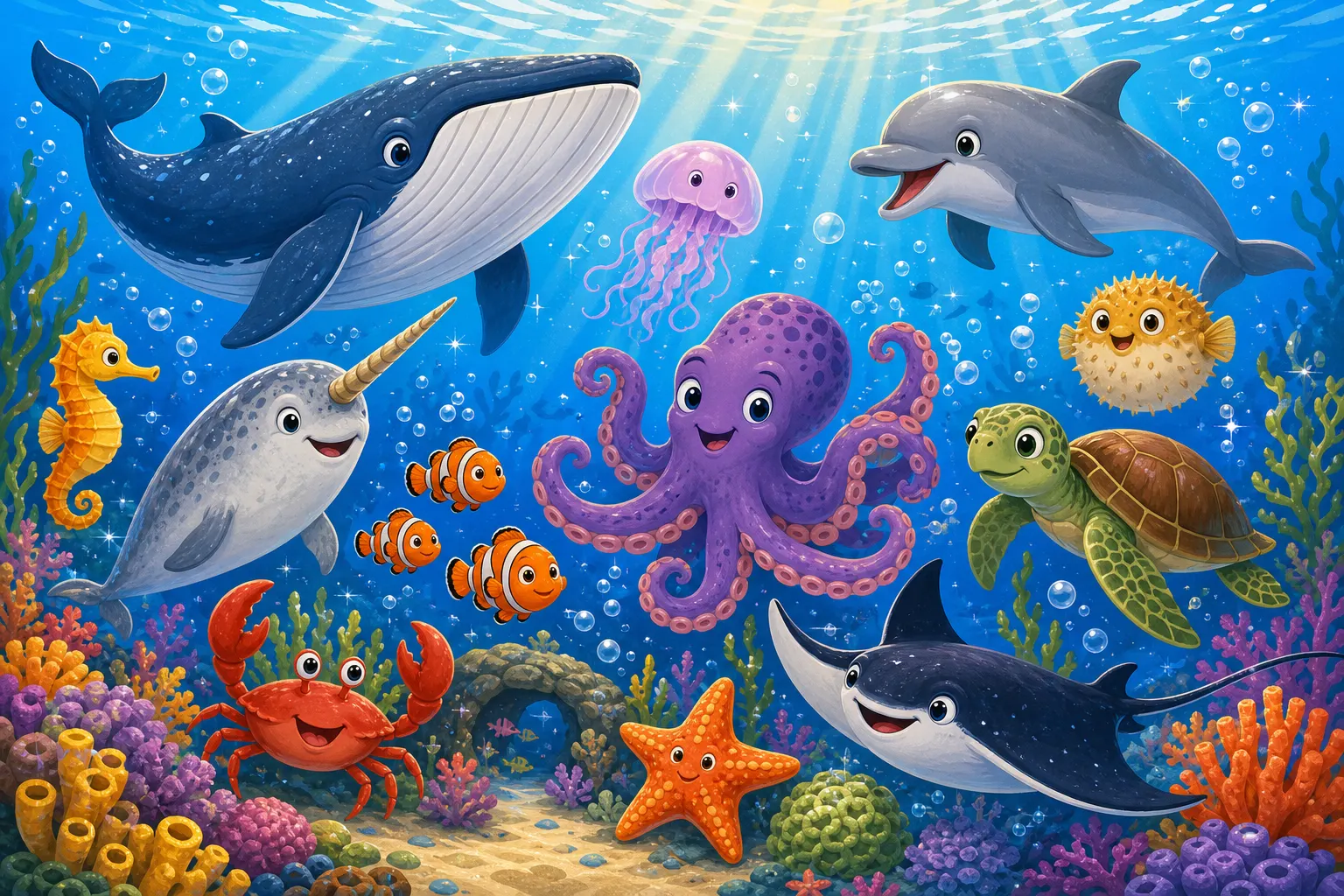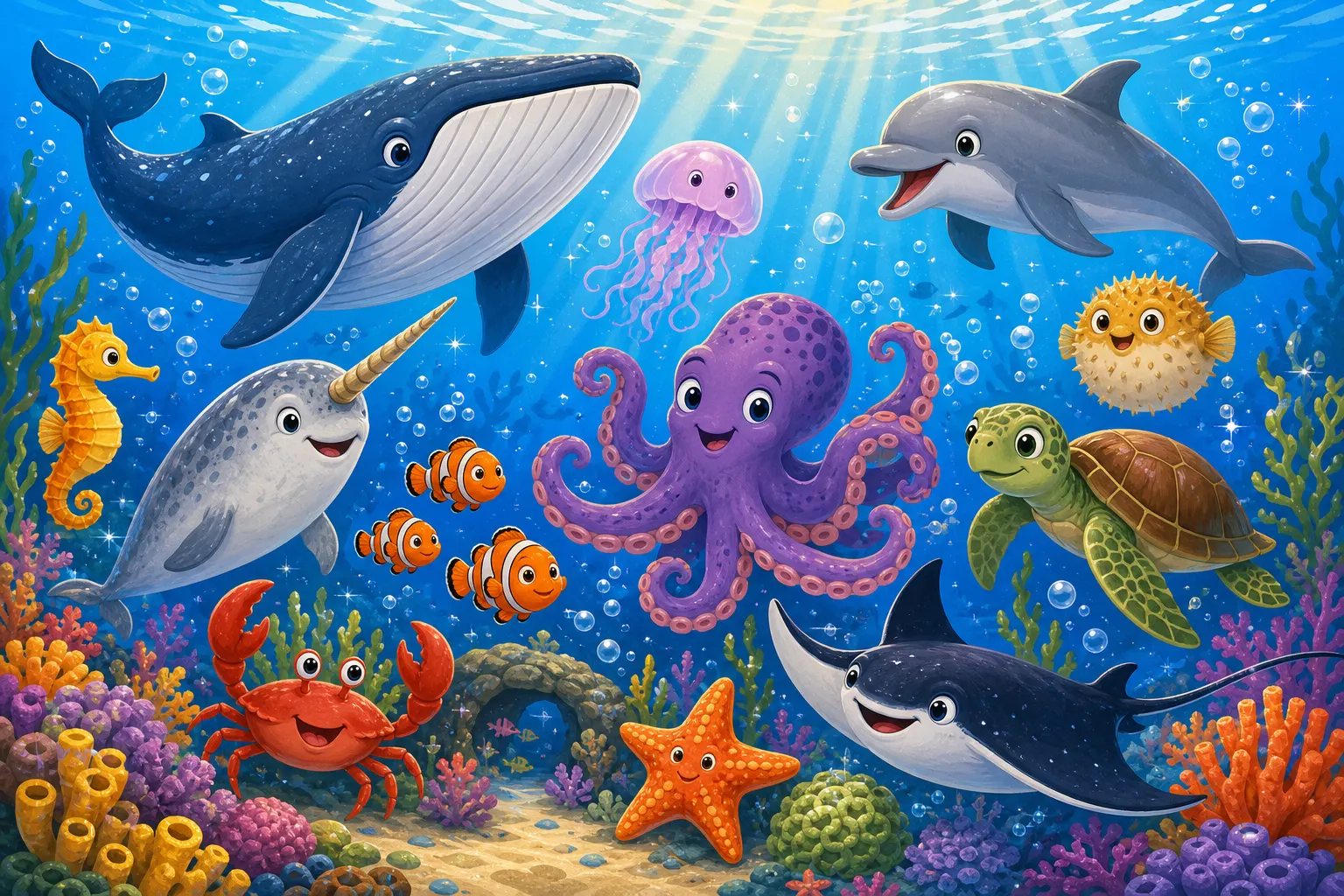
The ocean is like a giant, real-life fantasy world. It covers more than 70% of our planet, yet so much of it remains a mystery, full of creatures that are stranger and more wonderful than anything we could imagine. Getting kids excited about marine life is easy when you have a few mind-blowing facts up your sleeve!
This post contains affiliate links. We may earn a small commission at no extra cost to you. Quick answer: Some of the most amazing ocean animal facts for kids are that narwhals are the 'unicorns of the sea' with a giant tooth growing through their lip, anglerfish use a built-in glowing lure to hunt in the dark, and vampire squid shoot light from their arm tips instead of ink. These facts capture the weird and wonderful nature of life underwater.Ready to dive in? Here are 12 of our favorite ocean animal facts to spark your child's curiosity about the world beneath the waves.
1. Narwhals Are the Unicorns of the Sea
That incredible horn isn't a horn at all—it's a tooth! A narwhal's long, spiraled tusk is actually a canine tooth that can grow up to 10 feet long, piercing right through its upper lip. Scientists believe this super-tooth is packed with nerve endings, helping the narwhal "see" and navigate the murky Arctic waters.
2. The Anglerfish Has Its Own Fishing Rod
Living in the pitch-black deep sea, the anglerfish has a clever way to catch dinner. It has a piece of its spine that juts out over its head, with a tip that glows with bioluminescent bacteria. This built-in lure dangles in the dark, attracting smaller fish right to the anglerfish's enormous mouth. What a creepy, cool adaptation!
3. Vampire Squid Don't Suck Blood
Despite its spooky name, the vampire squid is actually quite gentle. It's not a true squid and gets its name from its dark, webbed arms that look like a cape. When threatened, it doesn't shoot ink; instead, it shoots a sticky cloud of glowing mucus from its arm tips to dazzle predators while it makes a quick escape.
4. Sea Cucumbers Breathe Through Their Butts
This is a fact that will definitely get a giggle. Sea cucumbers, the lumpy creatures on the seafloor, have respiratory trees located right next to their anus. They pull water in through their backside to absorb oxygen. It's one of nature's weirdest and most wonderful designs. You can find all sorts of creatures like this in a great ocean animal encyclopedia.
5. Starfish Can Regrow Their Arms
Talk about a superpower! If a starfish loses an arm to a predator, it can simply grow a new one. Even more amazing, if a severed arm has a piece of the central body attached, it can sometimes regrow into a whole new starfish. This process of regeneration is a key survival skill.
6. The Pistol Shrimp Is Louder Than a Jet Engine
This tiny shrimp has one oversized claw that it can snap shut at an incredible speed. The snap creates an air bubble that collapses with a powerful shockwave, producing a sound that can reach 210 decibels—louder than a gunshot! This stunning blast is used to stun or kill prey instantly.
7. Dolphins Sleep with One Eye Open
Dolphins have a remarkable way of resting without drowning or becoming vulnerable to predators. They shut down only half of their brain at a time, a process called unihemispheric sleep. The other half remains alert, allowing them to keep swimming, breathing, and watching for danger with one open eye.
8. Male Seahorses Get Pregnant
In the seahorse world, it's the dads who carry the babies. The female seahorse lays her eggs into a special pouch on the male's abdomen. He then fertilizes them and carries them until they hatch, releasing tiny, fully-formed seahorses into the water. It's a fantastic example of unique parenting roles in nature. Bring the ocean to life with a set of ocean animal toys to act out these cool facts.
9. Box Jellyfish Have 24 Eyes
These jellies, some of the most venomous creatures in the ocean, have a surprisingly complex visual system. They have 24 eyes arranged in clusters around their bell-shaped body. While they don't see images as clearly as we do, this setup helps them detect light and shadows to navigate and avoid obstacles.
10. The Colossal Squid Has Eyes the Size of Dinner Plates
Living deep in the Southern Ocean, the colossal squid is a true giant. Its eyes are the largest in the animal kingdom, measuring up to 11 inches across. These massive eyes help it see in the near-total darkness of the deep sea, spotting predators like sperm whales.
11. Parrotfish Create Their Own Sleeping Bags
Many species of parrotfish have a truly unique bedtime routine. At night, they secrete a mucus bubble from their mouths that envelops their entire body. This gross but effective sleeping bag masks their scent from nighttime hunters like moray eels.
12. Green Sea Turtles Can Hold Their Breath for Hours
While they need to come up for air, green sea turtles can stay submerged for a very long time. When resting or sleeping, they can lower their heart rate so much that they can stay underwater for up to five hours. For more in-depth learning, apps like Khan Academy Kids have free, fun lessons about animals and nature.
For more amazing facts about the world, you can also check out our post on 10 amazing animal facts for kids. The National Oceanic and Atmospheric Administration (NOAA) is another fantastic resource for verified ocean information.
FAQ
H3: Why is learning about the ocean important for kids?
Learning about ocean animals and ecosystems helps kids understand the importance of conservation and how interconnected life on Earth is. It sparks curiosity and can inspire a lifelong passion for science and nature.
H3: What is the deepest part of the ocean called?
The deepest part of the ocean is the Mariana Trench, located in the western Pacific Ocean. Its deepest point, the Challenger Deep, is nearly 7 miles (11,000 meters) deep!
H3: How can we help protect ocean animals?
Simple actions can make a big difference! Reducing plastic use, participating in local beach cleanups, and learning more about sustainable seafood choices are all great ways to help protect our oceans and the amazing creatures that live in them.
---