Getting your kids active outdoors doesn't have to be complicated or expensive. One of the best ways to encourage movement, creativity, and problem-solving is with a classic DIY project: a backyard obstacle course. It’s a fantastic way to burn off energy while building crucial physical and cognitive skills.
This post contains affiliate links. We may earn a small commission at no extra cost to you. Quick Answer: To build a simple backyard obstacle course for kids, use household items you already own. Create stations like crawling under a blanket draped over chairs, zig-zagging around shoes, balancing on a line of tape on the ground, and jumping over a row of pillows. The goal is fun and movement, not perfection.This guide will walk you through creating a simple, fun, and safe course your kids will love, using items you likely have lying around the house.
Why a Backyard Obstacle Course is a Game-Changer
An obstacle course is more than just a way to keep the kids busy for an afternoon. It's a powerful developmental tool disguised as play. By navigating different challenges, kids improve their gross motor skills, which involve the large muscles of the body used for walking, jumping, and balancing.
More Than Just Fun
According to child development experts, this kind of active play is essential for physical health, coordination, and even cognitive function. A study from the Children's Hospital of Orange County (CHOC) highlights how activities like balancing and crawling help strengthen a child's core and improve their spatial awareness. Plus, it’s a huge confidence booster when they finally complete the course!
Planning Your Course: Keep it Simple and Safe
Before you start dragging furniture outside, take a moment to plan. The best courses have a clear start and finish line and a logical flow from one station to the next. Sketch it out on a piece of paper first.
Safety First!
Your number one priority is safety. Ensure the ground is clear of any sharp objects like rocks or sticks. Use soft items for landing zones (like pillows or blankets) and avoid anything too high for your child's age and ability. Always supervise, especially with younger children.
Budget-Friendly Obstacle Course Ideas
You don't need fancy equipment. The best obstacle courses are born from creativity and everyday items.
The Crawl Zone
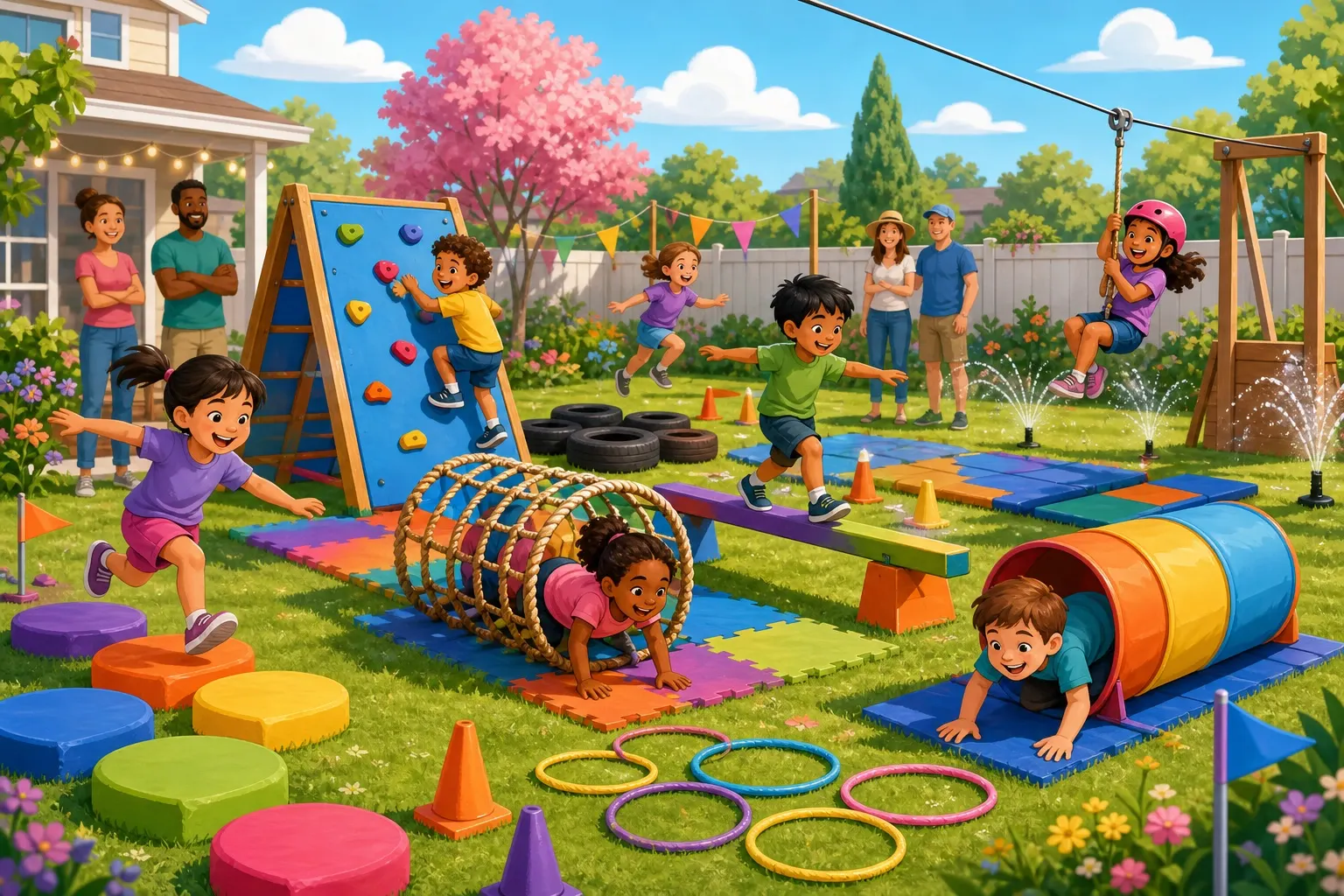
Create a low-to-the-ground tunnel. You can drape a blanket over two chairs, use a large cardboard box with the ends cut off, or invest in an affordable collapsible play tunnel that can be used for years. This is great for core strength and body awareness.
The Balance Beam
A balance beam doesn't have to be a high-wire act. You can lay a piece of rope or a garden hose on the ground in a straight or curvy line. For a slightly bigger challenge, use a sturdy, flat plank of wood laid directly on the grass. The goal is to walk from one end to the other without stepping off.
The Agility Run
This station is all about quick feet and changing direction. Place a series of objects on the ground for your child to weave through. You can use shoes, stuffed animals, or a set of colorful plastic agility cones to make it feel more official.
The Jump Station
Jumping is a fantastic skill that builds power and coordination. Create a series of small "hurdles" for your child to leap over. Old pillows, rolled-up towels, or even pool noodles laid on the ground work perfectly. For a target-based challenge, have them toss bean bags into a bucket or a hula hoop.
Putting It All Together
Arrange your stations in a loop or a line. Show your child how to complete each obstacle, then let them have at it! Time them with a stopwatch to see if they can beat their own record. This adds an extra layer of fun and motivation.
The Grand Finale
End the course with a fun, simple task like doing five jumping jacks, spinning in a circle three times, or running to a designated tree and back. Celebrate their finish with a high-five and a big cheer! The goal is to make them feel accomplished.
---
FAQ
What age is best for an obstacle course?
Simple obstacle courses can be adapted for children as young as two, focusing on basic movements like crawling and walking on a line. For kids aged 4-8, you can introduce more complex challenges like jumping, balancing, and zig-zagging.
How do I make it challenging for older kids?
For older kids (8+), add elements that require more coordination and strategy. Time them, have them carry something (like a cup of water) through the course, or add skill-based challenges like shooting a basketball or throwing a frisbee at a target. You can also get more advanced gear like a backyard ninja line kit.
What if I have a really small yard?
No problem! You can set up a mini-course on a patio or even indoors. Use furniture (safely) to create tunnels, tape on the floor for a balance beam, and pillows for hurdles. It’s all about adapting to your space.