Watching a preschooler try to button their own coat or hold a crayon is a lesson in determination. Those small, precise movements are powered by fine motor skills, the coordination of small muscles in the hands and fingers. Developing these skills is crucial for future tasks like writing, tying shoes, and using utensils. The best part? You don't need fancy toys—just a little creativity.
This post contains affiliate links. We may earn a small commission at no extra cost to you. Quick Answer: To boost your preschooler's fine motor skills, focus on fun, hands-on activities. Playing with Play-Doh, threading beads onto a string, using tweezers to pick up small objects, playing with spray bottles, and practicing with scissors are all fantastic ways to strengthen hand muscles and improve coordination for kids aged 3-5.Why Fine Motor Skills Are a Big Deal for Preschoolers
Fine motor skills are the foundation for so many essential life tasks. According to the Child Mind Institute, strengthening these small muscles helps children gain independence and confidence. When they can zip their own jacket or pour their own cereal, they feel a powerful sense of accomplishment. These activities also pave the way for academic success in kindergarten, especially for holding a pencil correctly and writing letters.
7 Easy Fine Motor Activities for Home
Here are some simple, low-prep activities you can do today to help your preschooler build those all-important hand and finger skills.
1. The Play-Doh Power-Up
Play-Doh is a classic for a reason. Squishing, rolling, pinching, and cutting the dough is a fantastic workout for little hands. Provide some simple tools like a kid-safe plastic knife or a small rolling pin to encourage different types of movements. Rolling tiny balls or long snakes is especially good for developing finger dexterity. You can grab a multicolor pack of Play-Doh for endless creative possibilities.
2. Threading and Lacing Fun
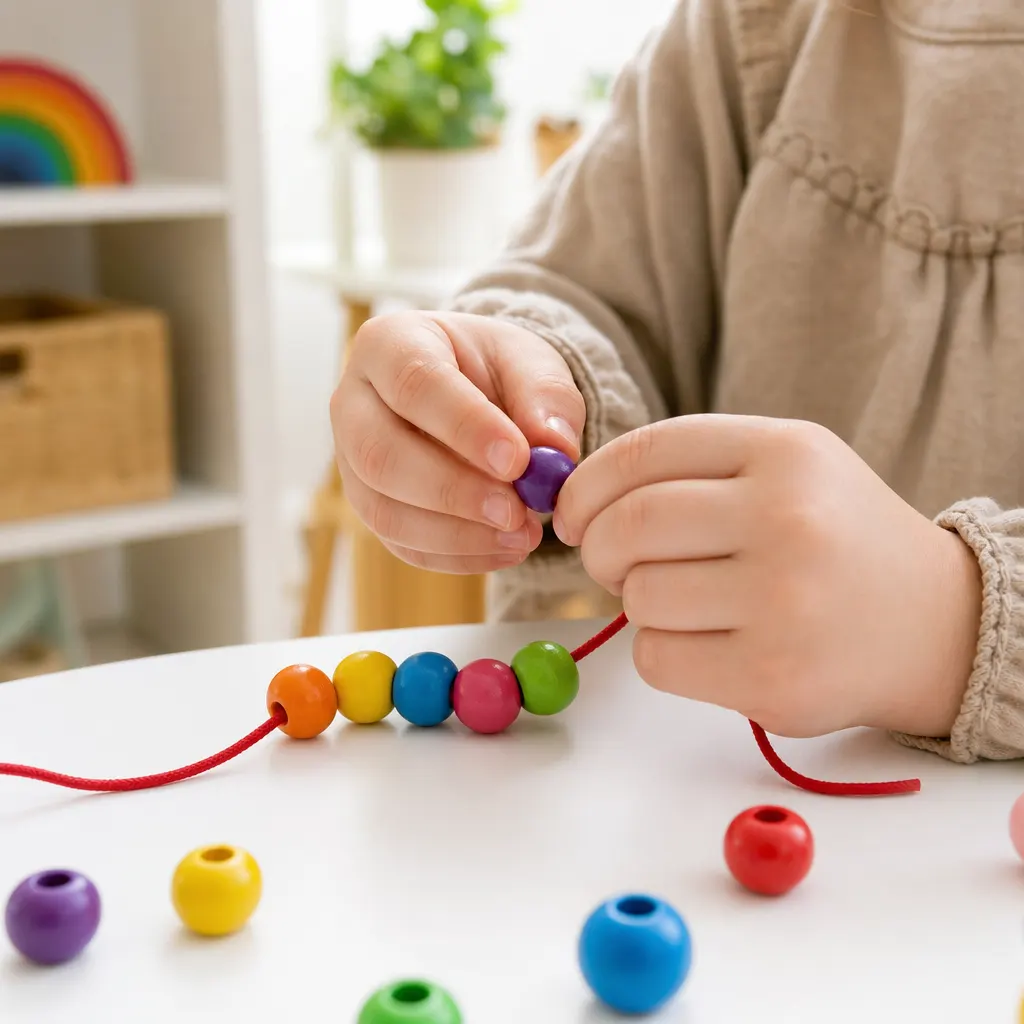
Threading chunky wooden beads onto a shoelace or pipe cleaner requires concentration and precise pincer grasp (using the thumb and forefinger). You can also use pasta shapes like penne or rigatoni. Lacing cards, where a string is woven through holes on a sturdy card, are another excellent option. This activity builds hand-eye coordination and prepares them for sewing and tying knots later on.
3. Tweezer Rescue Mission
This one feels like a game! Place a handful of small items—like cotton balls, pompoms, or large beans—in a bowl. Give your child a pair of kid-friendly tweezers and have them "rescue" the items by transferring them to an empty ice cube tray or another bowl. This is a super-focused activity that really hones that pincer grasp.
4. Spray Bottle Target Practice
Fill a small spray bottle with water and let your child go to town! They can spray chalk drawings on the sidewalk, water plants, or "clean" the windows. Squeezing the trigger is a repetitive motion that builds strength in the entire hand. It's a simple task that feels like a big, important job to a preschooler.
5. Scissor Skills Station
Learning to use scissors can be intimidating, but it's a vital skill. Start with safety scissors and have them snip simple strips of paper or even Play-Doh. Once they get the hang of the open-and-close motion, draw straight or curvy lines on paper for them to follow. Cutting builds hand strength and improves bilateral coordination (using both sides of the body at the same time). A good pair of blunt-tip kid's scissors is a must-have for any home art station.
6. Sticker Line-Up
Peeling stickers off a sheet is a surprisingly effective fine motor exercise. It requires a delicate touch and a strong pincer grasp. To add a challenge, draw a line or a simple shape on a piece of paper and ask your child to place the stickers along the line. This adds an element of precision and focus.
7. Painting with Q-tips
Swap the chunky paintbrushes for Q-tips! Dabbing paint onto paper with a Q-tip encourages a proper pencil grip without the pressure of trying to draw something specific. It's a great way to let them be creative while practicing the very hold they'll need for writing.
FAQ
My preschooler hates trying to write their name. Should I be worried?
Not at all! Many preschoolers find the pressure of writing letters frustrating. Focus on these play-based activities to build their hand strength first. When their hands are stronger and more coordinated, writing will feel much easier and more natural.
What's a good first step for teaching scissor safety?
Start by teaching them how to hold the scissors correctly (thumb in the small hole, two fingers in the big one) and how to carry them safely (blades closed, holding the blade end in their fist). Always supervise scissor use until you are confident in their ability.
Are there any apps that can help with fine motor skills?
While hands-on activities are best, some tablet apps can supplement their learning. Look for apps that involve tracing, dragging-and-dropping, and completing digital puzzles. Reputable learning platforms like Khan Academy Kids offer a variety of age-appropriate games.