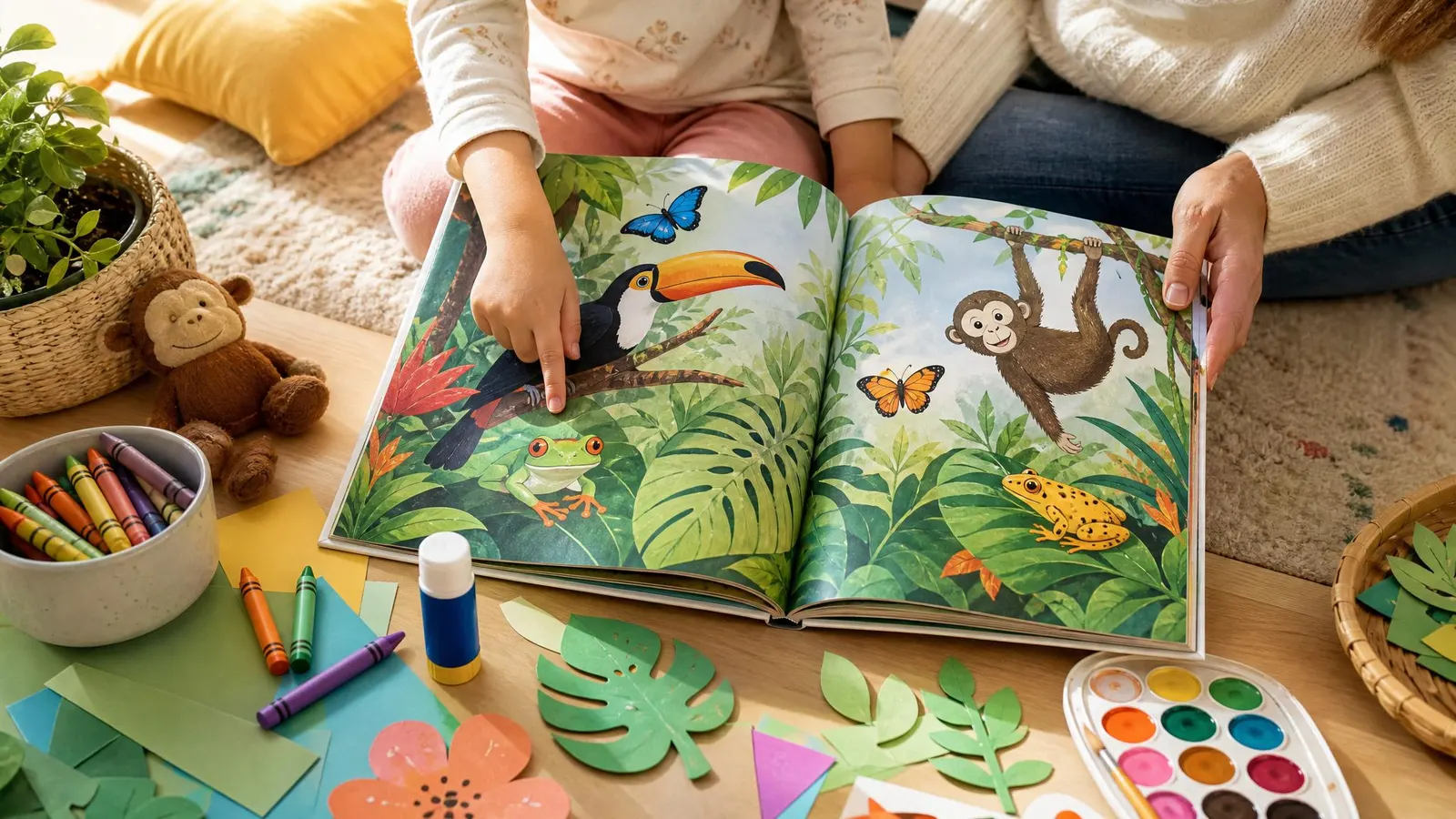
Rainforest animal facts for kids are perfect for read-aloud time because they mix wonder, movement, sounds, colors, and real science. Quick answer: start with 5-7 memorable animals, ask one "what do you notice?" question per page, and add a tiny hands-on activity afterward. Kids remember more when facts become something they can say, act out, sort, draw, or build.
This post contains affiliate links. We may earn a small commission at no extra cost to you.You do not need a full rainforest unit to make this work. A picture book, a few animal photos, and a short list of facts can turn ten minutes into a rich literacy-and-science moment. The trick is keeping the facts concrete: sticky frog toes, loud howler monkey calls, slow sloths, bright poison dart frogs, and toucans with giant bills.
Start With Animals Kids Can Picture
Rainforests are huge, layered ecosystems, so begin with animals that have a clear "hook." Preschoolers and early readers love facts they can repeat at breakfast.
Try this starter set:
- Sloth: moves slowly to save energy and stay harder for predators to spot.
- Toucan: uses its large bill to reach fruit and help control body temperature.
- Poison dart frog: has bright colors that warn predators to stay away.
- Howler monkey: makes one of the loudest calls in the forest.
- Leafcutter ant: carries pieces of leaves and helps its colony grow fungus for food.
- Jaguar: is a powerful rainforest hunter that can climb and swim.
The goal is not memorization. It is connection. When a child says, "The frog is bright because it says don't eat me," they are practicing observation, cause and effect, and vocabulary all at once.
For another animal-rich reading session, pair this with our dinosaur facts read-aloud guide.
Turn Each Fact Into a Read-Aloud Moment
Rainforest facts land better when kids get to do something with them. Before reading a page, invite your child to predict: "Which animal do you think lives up high in the trees?" After the page, ask one short question.
Keep the questions easy to answer:
- "What color did you notice first?"
- "Would this animal be loud or quiet?"
- "Where would it hide?"
- "What body part helps it survive?"
Then add movement. Stretch like a sleepy sloth. Cup your hands like a toucan bill. Tiptoe like a jaguar. Make one monkey call, then whisper about why animals might need to be quiet too. Movement gives energetic kids a way into the lesson without turning story time into a lecture.
If your child likes props, a set of rainforest animal figurines can make sorting and storytelling easier. A simple kids magnifying glass is also fun for looking closely at leaves, bark, and bug pictures.
Add One Tiny Science Activity
After the read-aloud, choose one short activity. Short matters. Five minutes of focused play beats a complicated project that drains everyone.
For rainforest layers, stack four pillows or paper strips: forest floor, understory, canopy, emergent layer. Ask your child where each animal might live. Jaguars often move along the forest floor. Sloths and monkeys spend lots of time in trees. Toucans are canopy birds.
For camouflage, place green, brown, and bright paper shapes on a patterned towel. Which ones are easy to spot? Which ones disappear? This opens the door to talking about why some animals hide while others use bright warning colors.
For sound, compare a whisper, a clap, and a big "howl." Which sound travels farthest across the room? The real rainforest is full of calls, rustles, wingbeats, rain, and insects. Kids can understand habitat by listening, not just looking.
Parents who want a ready-to-go shelf can add a rainforest picture book or a jungle sticker activity book, but paper scraps and curiosity are enough.
Keep the Facts Accurate but Gentle
Rainforest learning should feel exciting, not scary. It is okay to say that animals hunt, hide, compete, and protect themselves. Keep the details simple and age-appropriate.
A strong phrase is: "Every animal has a job to do in its habitat." Leafcutter ants recycle plant material. Toucans spread seeds after eating fruit. Frogs can show whether an environment is healthy. Predators like jaguars help keep ecosystems balanced.
For trustworthy background, the San Diego Zoo Wildlife Explorers site has kid-friendly animal profiles and habitat facts. Use it when your child asks a question you cannot answer. Looking things up together models curiosity without pretending adults know everything.
FAQ
What age is best for rainforest animal facts?
Ages 3-8 are a great fit. Younger kids can focus on colors, sounds, and animal movements. Older kids can start learning habitat layers, adaptations, food chains, and conservation vocabulary.
How many animal facts should I teach at once?
Five strong facts are plenty for preschoolers. If your child asks for more, keep going, but do not rush through a giant list. Repeating a few facts in different ways helps them stick.
Do kids need videos to understand rainforest animals?
No. Short videos can help, especially for animal sounds and movement, but books, photos, toys, drawing, and pretend play are enough for a meaningful lesson. Use video as a bonus, not the whole activity.