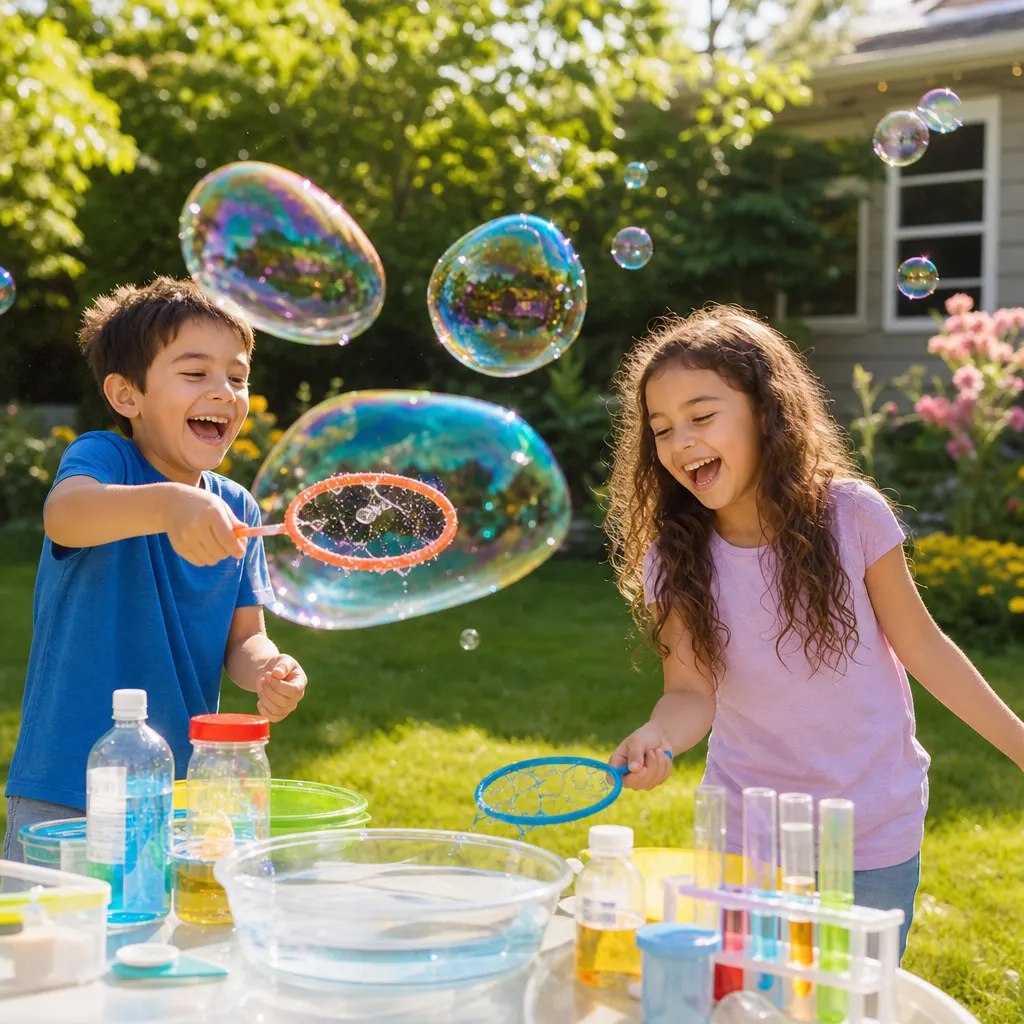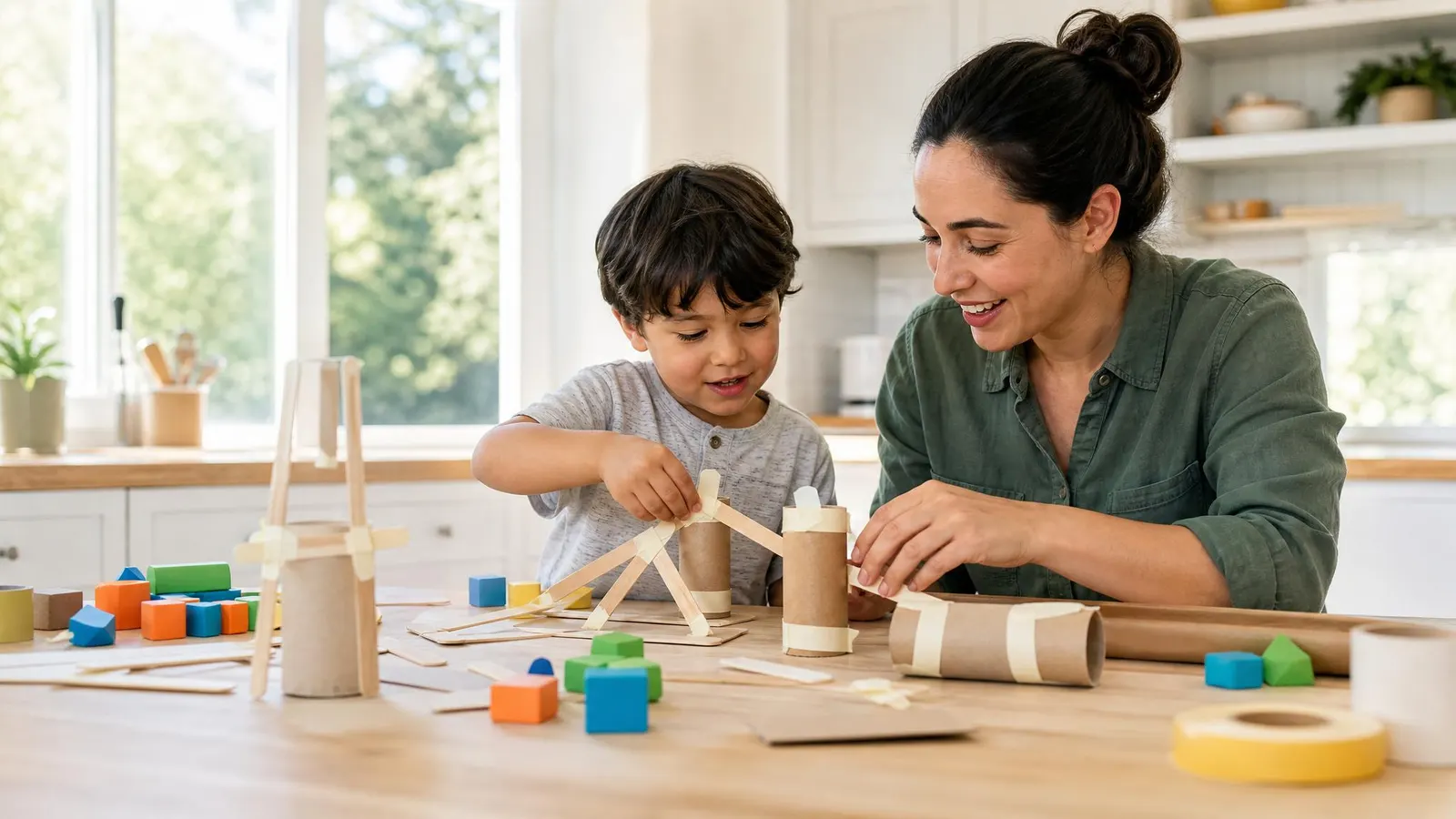
You don't need a fancy laboratory to introduce your child to the wonders of science. Your kitchen is already packed with everything you need to spark curiosity and conduct some seriously fun, hands-on science experiments at home. These simple activities are perfect for little hands and growing minds.
This post contains affiliate links. We may earn a small commission at no extra cost to you. Quick answer: To do easy science experiments at home, use common household items like baking soda, vinegar, food coloring, and dish soap. Simple activities like a baking soda volcano, homemade slime, or a walking water rainbow teach core scientific principles like chemical reactions and capillary action in a fun, visual way.These experiments aren't just about making a fun mess (though that's part of the joy!). They're about teaching kids to ask questions, make predictions, and see how the world works. Let's get started!
1. The Classic Baking Soda Volcano
It's a classic for a reason! This experiment is a thrilling introduction to chemical reactions that you can make in a small cup or build up with play-doh for the full effect.
What You'll Need
- A small cup or plastic bottle
- Baking soda
- Vinegar
- A drop of dish soap
- A few drops of red food coloring (optional, but fun!)
- A tray or baking sheet to contain the "lava"
The Experiment
Place the cup on the tray. Add a few spoonfuls of baking soda, the dish soap, and the food coloring. When you're ready for the eruption, pour in the vinegar and watch the fizzy lava flow! Talk about what's happening: the baking soda (a base) is reacting with the vinegar (an acid) to create carbon dioxide gas, which makes all the bubbles.
2. Walking Water Rainbow
This mesmerizing experiment is a beautiful and simple way to demonstrate capillary action. It’s a quiet, magical activity that teaches kids how water can move against gravity.
What You'll Need
- 3-5 clear glasses or jars
- Water
- Paper towels
- Food coloring (at least red, yellow, and blue)
The Experiment
Line up the glasses. Fill the first, middle, and last glass about three-quarters full with water, leaving the ones in between empty. Add a different primary color of food coloring to each water-filled glass. Fold paper towels into long strips. Place one end of a paper towel in a glass with water and the other end into an empty glass next to it. Repeat for all glasses. Over the next hour, watch as the colored water "walks" up the paper towels and into the empty glasses, mixing to create new colors! For a great visual guide on capillary action, check out the resources at the California Science Center.
3. Magical Milk and Soap Experiment
This is one of the most visually stunning kitchen science experiments, and it happens in seconds. It’s a perfect illustration of surface tension.
What You'll Need
- A shallow dish or plate
- Milk (whole milk works best due to higher fat content)
- Various colors of food coloring
- A cotton swab or Q-tip
- A small drop of dish soap
The Experiment
Pour a thin layer of milk into the dish. Carefully add a few separate drops of different food coloring colors onto the center of the milk. Now, dip the end of the cotton swab in dish soap and touch it to the center of the milk. Bam! The colors will burst and swirl around the plate. The soap breaks the surface tension of the milk and reacts with the fat molecules, causing the colorful commotion.
4. DIY Slime Creation
Making slime is a fantastic sensory activity and an introduction to polymers. While there are many recipes, this one is simple and borax-free. This is also a great way to practice the kind of mixing and measuring that builds fine motor skills.
What You'll Need
- 1/2 cup of clear or white school glue
- 1/2 cup of water
- 1/2 teaspoon of baking soda
- 1 tablespoon of contact lens solution (must contain boric acid and sodium borate)
- Glitter or food coloring (optional)
The Experiment
In a bowl, mix the glue and water. Add your food coloring or glitter if using. Stir in the baking soda. Now, slowly add the contact lens solution while stirring continuously. The mixture will start to pull away from the sides of the bowl and become slimy. Knead it with your hands for a few minutes until it reaches the perfect slime consistency.
5. Sink or Float? An Object Exploration
This simple game is a great introduction to the concepts of density and buoyancy. It’s driven entirely by your child's curiosity.
What You'll Need
- A large bowl, bin, or bathtub filled with water
- A collection of small, waterproof household items (e.g., a cork, a toy car, a plastic block, a coin, a leaf, an apple slice)
- A towel for inevitable splashes!
The Experiment
Lay out all the objects. Ask your child to predict for each one: will it sink or will it float? Drop the items into the water one by one to test their hypotheses. Talk about why some things sink (they are more dense than water) and others float (they are less dense). There’s no need for a deep dive on the physics; the simple act of predicting and observing is the core of the scientific method. For more structured learning, consider a pre-made kids science kit that comes with all the supplies for guided activities.
These experiments show that science is not just something in a textbook; it’s a fun, creative, and accessible part of our everyday lives.
FAQ
H3: What is the easiest science experiment for a toddler?
The "Sink or Float" experiment is fantastic for toddlers. There's no complex reaction, just simple cause and effect. They can safely handle the objects and enjoy the splashing, all while making simple predictions.
H3: How do I explain the science without it being boring?
Use simple, relatable terms. For the volcano, say "The two liquids mix and make lots of bubbles, just like in soda!" For the walking water, say "The paper towel is thirsty, so it's drinking the water and carrying it to the next cup." Connect it to what they already know.
H3: Are these experiments safe?
Yes, all of these use common, non-toxic household ingredients. However, adult supervision is always recommended, especially with small children, to prevent them from ingesting the materials.