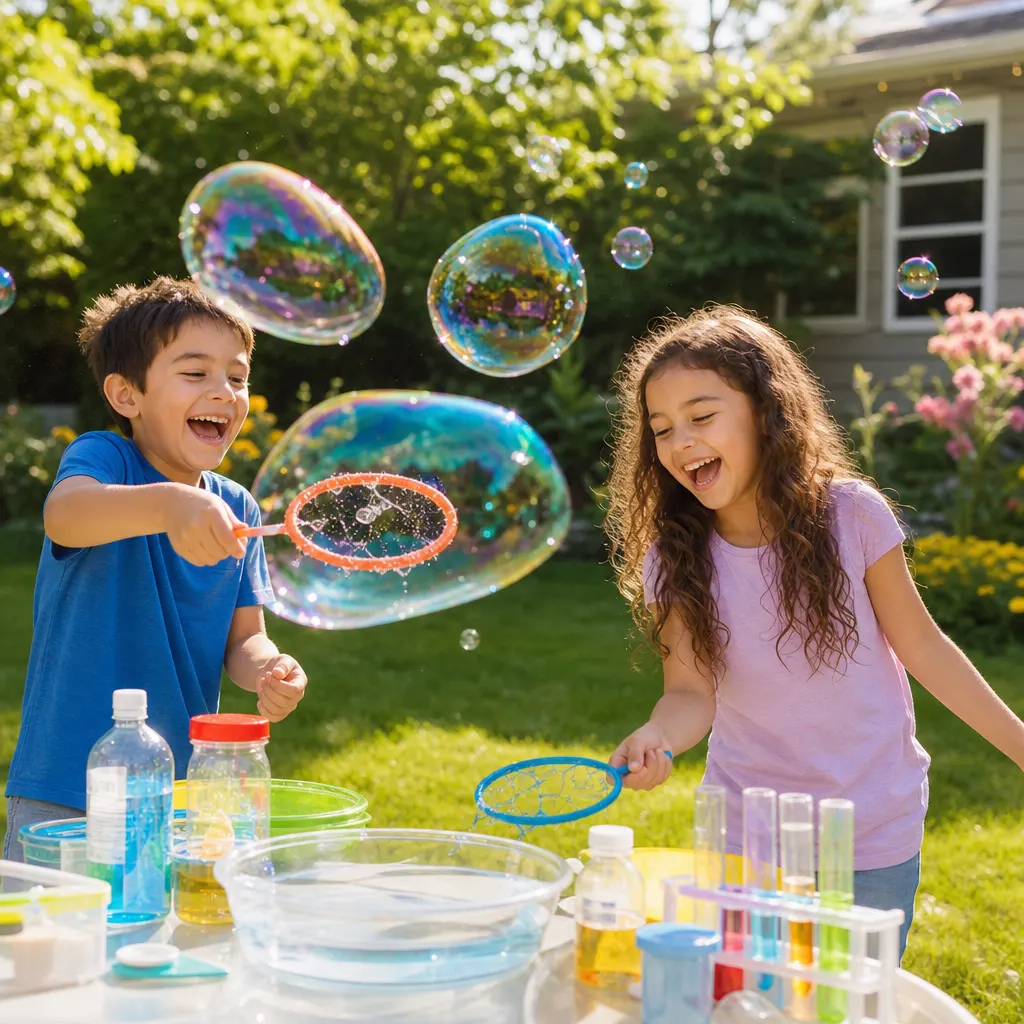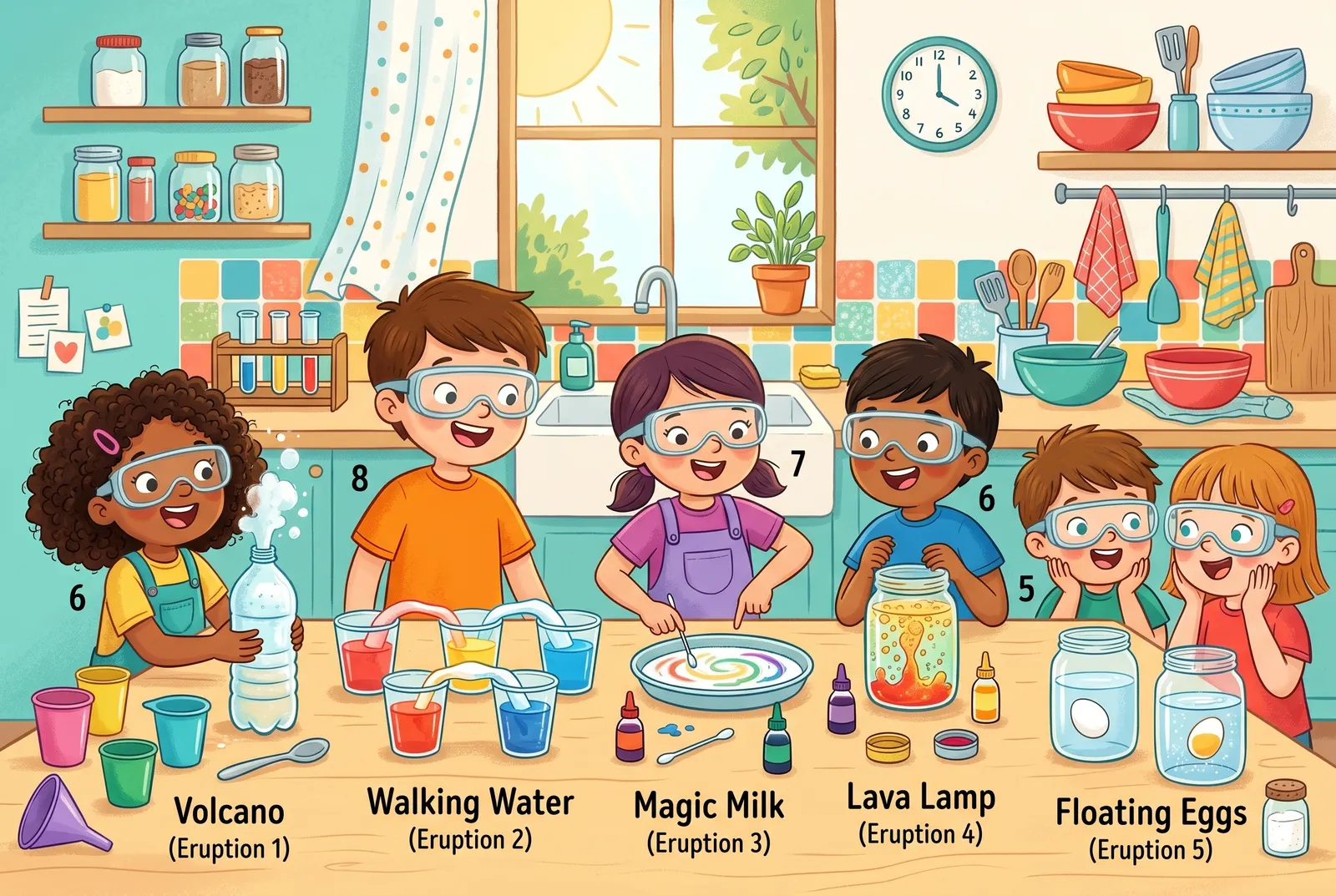
You don't need a fancy lab to introduce your child to the wonders of science. Your kitchen is full of amazing materials that can fizz, pop, and change right before their eyes! Getting kids involved in hands-on science experiments is one of the best ways to nurture their natural curiosity and build foundational STEM skills.
This post contains affiliate links. We may earn a small commission at no extra cost to you. Quick answer: To do easy science experiments at home, focus on simple, visual reactions. Start with classics like the baking soda and vinegar volcano, making slime, or floating an egg in saltwater. These activities use common household items, are safe for kids with supervision, and teach core concepts like chemical reactions and density in a fun, memorable way.The goal isn't to raise a mini-scientist overnight. It's about showing them that asking questions and discovering answers is a thrilling adventure you can have together, any day of the week.
1. The Classic Baking Soda & Vinegar Volcano
This one is a classic for a reason—it never fails to get a wide-eyed reaction. It's a fantastic, simple introduction to chemical reactions.
What You'll Need
- A small bottle or jar
- Baking soda
- Vinegar
- A tray or baking dish to contain the mess
- Optional: A few drops of red food coloring
The Experiment
Place the bottle in the tray. Add a few tablespoons of baking soda and the food coloring to the bottle. When you're ready for the eruption, pour in the vinegar and watch the fizzy "lava" flow! Talk about how the two ingredients created a gas (carbon dioxide) that needed to escape.
2. Make Your Own Ooey-Gooey Slime
Slime is a sensory dream and an amazing lesson in polymers. It’s a non-Newtonian fluid, which is a fancy way of saying it acts like both a solid and a liquid.
What You'll Need
- 1/2 cup of clear or white school glue
- 1/2 cup of water
- 1/2 teaspoon of Borax
- 1 cup of warm water
- Food coloring and glitter (optional)
The Experiment
In one bowl, mix the glue and 1/2 cup of water. Add your food coloring here. In a separate bowl, dissolve the Borax in 1 cup of warm water. Slowly pour the Borax solution into the glue mixture while stirring. You'll see the slime form almost instantly! For a ready-made option, you can find tons of all-in-one slime kits that have everything included.
3. The Magical Floating Egg
This experiment is a super cool way to demonstrate the concept of density in a way that kids can see with their own eyes.
What You'll Need
- A tall glass
- Water
- Salt
- A raw egg
The Experiment
Fill the glass about halfway with water and gently place the egg inside—it will sink. Now, take the egg out, and stir in a generous amount of salt (3-4 tablespoons). Keep stirring until it dissolves. Carefully place the egg back in the saltwater. It should float! This is because the salty water is more dense than the plain tap water. For more guided discoveries, a service like Outschool has live online classes where kids can do experiments like this with a teacher.
4. DIY Lava Lamp
Create the groovy, bubbling effect of a lava lamp with—you guessed it—more kitchen chemistry. This is a great visual for liquid density and chemical reactions.
What You'll Need
- A clear glass or plastic bottle
- Water
- Vegetable oil
- Food coloring
- An effervescent tablet (like Alka-Seltzer)
The Experiment
Fill the bottle about 2/3 full with vegetable oil. Fill the rest with water, leaving a little space at the top. Notice how the oil and water don't mix? Add a few drops of food coloring; it will sink through the oil and color the water. Now, break an effervescent tablet in half and drop it in. The tablet will react with the water to create gas bubbles that carry colored water up through the oil, creating a lava lamp effect!
5. Sprout Seeds in a Jar
Teach the magic of germination by sprouting seeds right on your windowsill. This living experiment helps kids understand the life cycle of plants.
What You'll Need
- A clear glass jar
- Paper towels
- Water
- Bean seeds (lima or mung beans work well)
The Experiment
Fold a few paper towels and place them inside the jar, lining the sides. Stuff more paper towels in the center to hold the lining in place. Wedge a few bean seeds between the glass and the paper towel lining. Add a small amount of water to the bottom of thejar to moisten the paper towels. Place it in a sunny spot and watch over the next few days as roots and sprouts appear! It’s a great way to practice patience and observation, skills that are also honed through activities that build fine motor skills.
For more structured fun, a complete kids' science experiment kit can provide all the materials and instructions for dozens of exciting projects. The U.S. Geological Survey also has some amazing, simple experiments on their USGS.gov website for more ideas.
FAQ
H3: What is the easiest science experiment for a 4-year-old?
The baking soda and vinegar volcano is often the best starting point. The reaction is big, immediate, and easy for a young child to understand as a "mix and boom!" concept. It’s a great introduction to cause and effect.
H3: How can I make science experiments less messy?
Preparation is key! Always work on a large tray, baking sheet, or outdoors if possible. Have paper towels and wipes ready before you start. Using smocks or old t-shirts can also save clothes from any colorful mishaps.
H3: Are these experiments safe?
Yes, all the experiments listed here use non-toxic, common household items and are safe for kids with adult supervision. The most important rule is to teach your child not to eat any of the materials and to help with cleanup afterward.