You don't need a fancy laboratory to introduce your child to the wonders of science. Your kitchen is already packed with everything you need for mind-blowing discoveries! Kitchen science is all about using everyday items to explore basic scientific principles in a fun, hands-on way.
This post contains affiliate links. We may earn a small commission at no extra cost to you. Quick answer: The easiest way to start with kitchen science is by using baking soda and vinegar. A classic volcano eruption in a cup or a self-inflating balloon experiment shows a basic chemical reaction that is safe, exciting, and uses items you likely already have. These activities are perfect for sparking a love for STEM.Getting started with science at home isn't about getting everything right; it's about asking questions, making predictions, and having fun together. Let's turn your kitchen counter into a launchpad for curiosity.
1. The Classic Baking Soda & Vinegar Volcano
This is a rite of passage for every little scientist. It’s a simple, dramatic, and safe way to see a chemical reaction up close.
How It Works
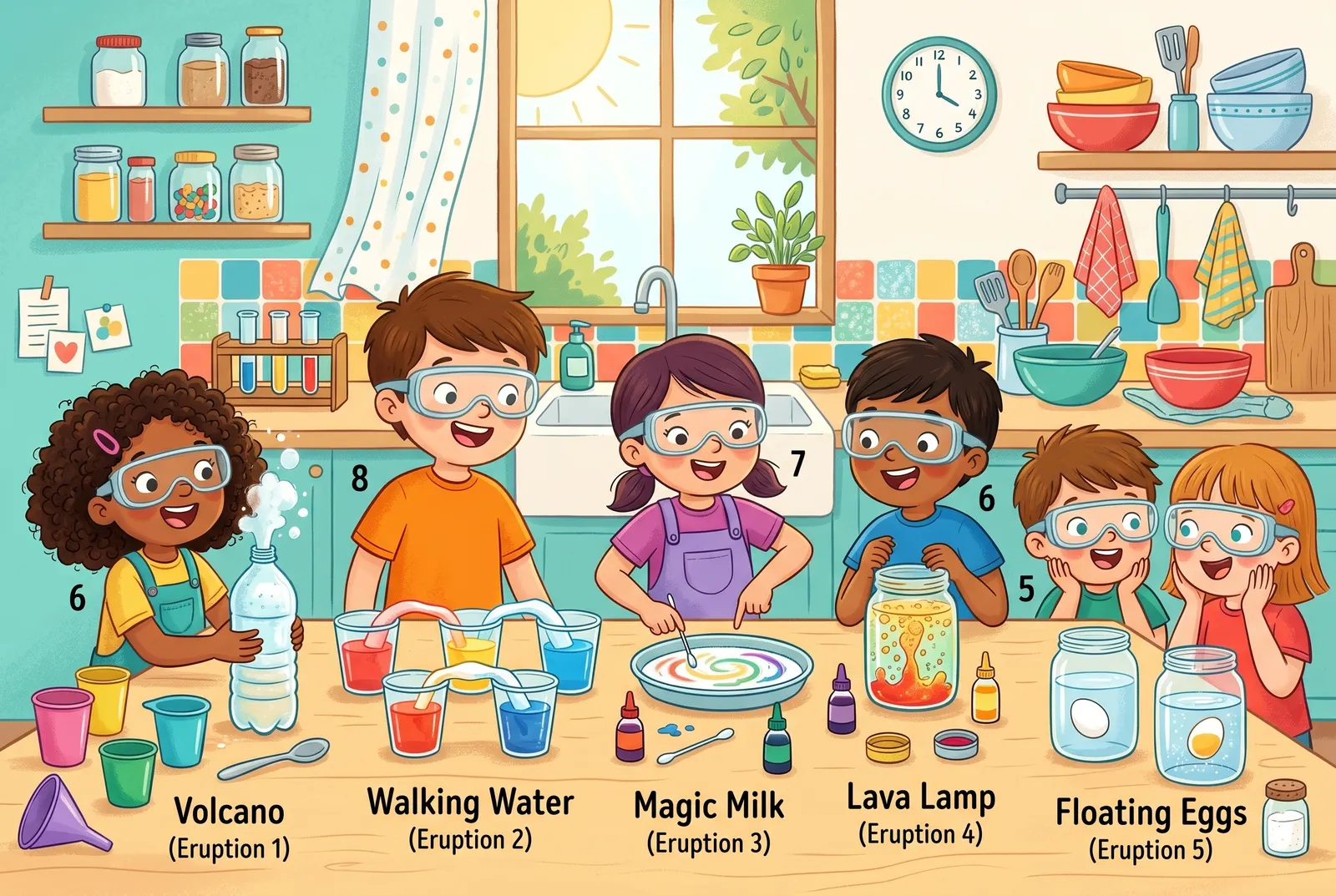
When you mix baking soda (a base) and vinegar (an acid), they react to create carbon dioxide gas. This gas builds up and needs to escape, causing the fizzy eruption! For extra flair, add a few drops of red food coloring to make it look like lava. This is a foundational experiment that never fails to get a "wow!"
2. The Self-Inflating Balloon
This experiment uses the same reaction as the volcano but channels the gas for a different, magical-seeming result.
Capturing the Gas
Pour some vinegar into a plastic bottle. Stretch a balloon and, with a funnel, add a few teaspoons of baking soda inside it. Carefully fit the balloon's opening over the bottle's neck without spilling the powder. When you're ready, lift the balloon so the baking soda falls into the vinegar. The balloon will inflate all by itself! It’s a fantastic visual for how gases take up space.
3. "Magic" Milk Color Explosion
This is a beautiful and mesmerizing experiment that demonstrates the properties of surface tension. It looks like a work of art!
Breaking the Tension
Pour a thin layer of milk onto a plate. Add drops of different colored food coloring. Now, dip a cotton swab in dish soap and touch it to the surface of the milk. The colors will burst and swirl! The soap breaks the surface tension of the milk and reacts with the fat molecules, causing the colors to dance. For more visual science fun, check out the resources at National Geographic Kids.
4. DIY Slime Creation Station
Slime is more than just a gooey toy; it’s a lesson in polymers. While there are many recipes, a simple and reliable one uses school glue and a saline solution.
Making Polymers
Mix a bottle of Elmer's school glue with a bit of water and a pinch of baking soda. Then, slowly add contact lens saline solution while stirring until the mixture pulls away from the sides of the bowl. It's a fantastic sensory activity and a great introduction to chemistry. For more structured STEM fun, our guide to easy hands-on science experiments has even more ideas.
5. The Unpoppable Bubble
Can a bubble be... unpoppable? With the right surface, yes! This is a simple but amazing way to explore elasticity and chemistry.
The Secret Ingredient
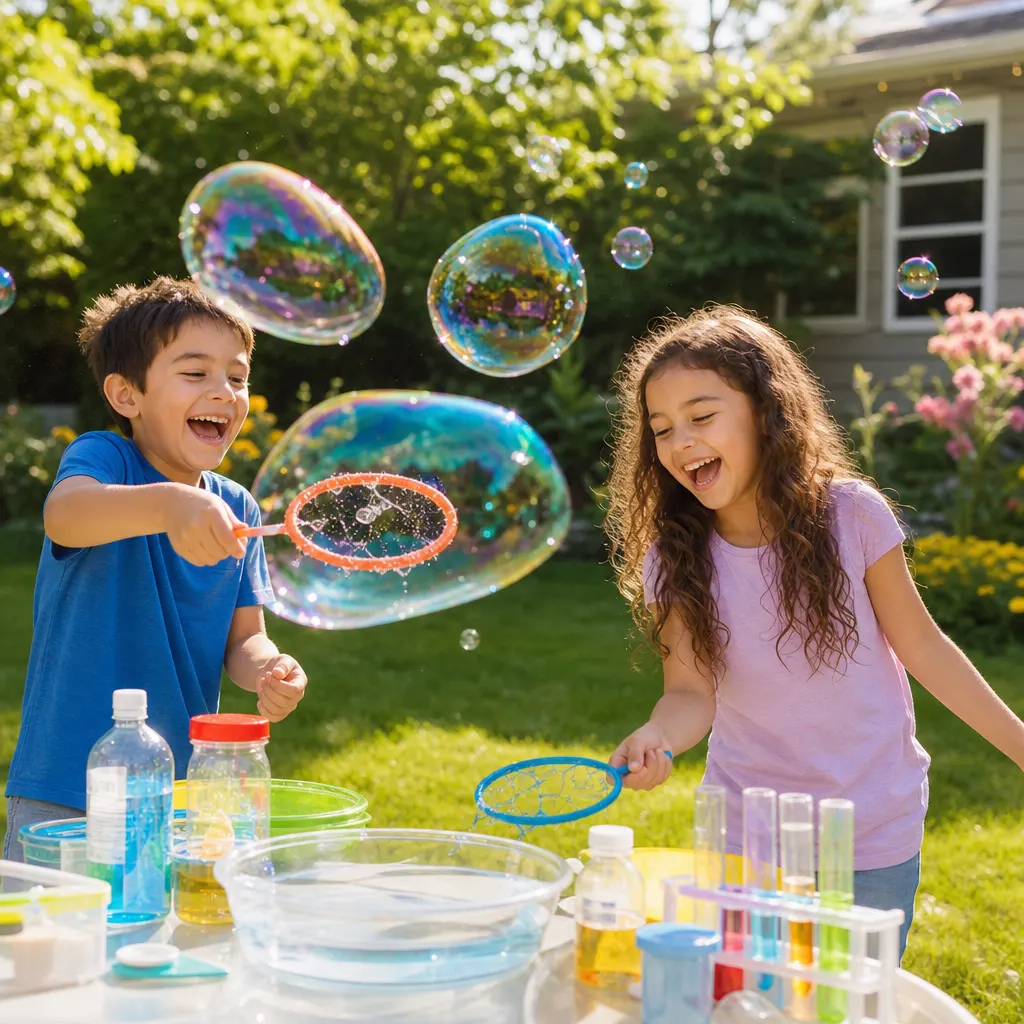
The trick is to add glycerin to your bubble mixture. A good starting recipe is 6 cups of water, 1 cup of dish soap, and 1 tablespoon of vegetable glycerin. Let the solution sit for a few hours. Then, wearing a simple cotton glove, you can bounce and hold the bubbles without them popping because the glove's soft fibers don't disrupt the bubble's fragile soap film. You can even get a full bubble science kit for more advanced fun.
These kitchen science experiments show that learning can happen anywhere, anytime, with the simplest of ingredients.
FAQ
H3: Are these kitchen science experiments safe for toddlers?
Yes, all the experiments listed here use non-toxic, common household items. However, adult supervision is always essential to prevent ingestion and ensure kids are handling materials properly. They are generally best for ages 3 and up.
H3: What is the single most important supply for kitchen science?
Besides curiosity? A good set of measuring cups and spoons. They are essential for most experiments and also help teach kids about measurements, following instructions, and basic math skills.
H3: How do I explain the science without it being boring?
Use simple analogies. For the volcano, you can say, "The baking soda and vinegar make a bunch of air really fast, and it all rushes out!" Focus on the observation and the "what happened" more than the complex scientific terms.