The jump from picture books to chapter books is a big milestone — and the right book can make all the difference. Pick the wrong one and your kid stares at the page, overwhelmed. Pick the right one and they're begging for "just five more minutes."
This post contains affiliate links. We may earn a small commission at no extra cost to you. Quick answer: The best beginner chapter books for early readers ages 6-8 are short (under 100 pages), have large text, and feature characters kids actually care about. Top picks include Magic Tree House, Mercy Watson, Owl Diaries, and Nate the Great. Any of these can bridge the gap from picture books beautifully — even for reluctant readers.The good news? You don't have to guess. Here's a parent-tested guide to the best first chapter books, and how to match the right one to your reader's personality and level.
What Makes a Good Beginner Chapter Book
Not all "easy chapter books" are created equal. A great transitional reader has short chapters (5–10 pages each), simple sentences, and plenty of white space on the page.
Look for These Features
Illustrations every few pages help anxious new readers feel at home. If a book feels thin and friendly, that's a feature, not a flaw. Avoid anything marketed as "easy" that still packs 200 words on a page with tiny font — that defeats the purpose.
Short chapters matter even more than total page count. A 100-page book with 8-page chapters feels very different from the same-length book with 25-page chapters.
The Magic Tree House Series
If there's one series that has converted more reluctant readers than any other, it's Magic Tree House. Jack and Annie travel through time from a tree house in their backyard, solving mysteries across ancient Egypt, the Middle Ages, and beyond.
Why Kids Love It
Each book is self-contained, so there's no pressure to remember a complex backstory. Chapters are just 8–10 pages, the pacing is fast, and the facts are genuinely interesting. Magic Tree House book sets also come with companion "Fact Tracker" nonfiction books, which is a lovely way to extend learning after story time. Perfect for ages 6–8 at reading levels Grade 1.5 to 3.
Nate the Great and Owl Diaries
Two very different series — both perfect for this age group.
Nate the Great is a classic. Nate is a kid detective who solves simple neighborhood mysteries in short, punchy chapters. The humor is dry and gentle. These have been around since the 1970s and still hold up beautifully. Nate the Great collections are ideal for kids who love mysteries or just want a fast, satisfying read. Owl Diaries is a diary-format series about a young owl named Eva who loves art, crafts, and her friends. It's illustrated on almost every page, which makes it feel wonderfully manageable. Great for kids who've heard about Diary of a Wimpy Kid but aren't quite ready for something that dense yet.Matching a Book to Your Kid's Personality
- Mystery fan? → Nate the Great
- Creative, journal-loving kid? → Owl Diaries
- Adventure seeker? → Magic Tree House
- Animal lover? → Mercy Watson (pigs!) or Zoey and Sassafras
Mercy Watson: Funny, Warm, and Just Challenging Enough
Kate DiCamillo's Mercy Watson series is pure joy. Mercy is a pig who believes she is a dog, and the humans around her have absolutely no idea what to do about it. The writing is beautifully simple — clean and genuinely witty.
Why It Works for New Chapter Book Readers
Each book is under 90 pages with large text and expressive illustrations on most spreads. Chapters run 4–6 pages. There are six books in the series — just right. Enough to build real reading momentum without becoming a multi-year commitment.
Mercy Watson book sets work especially well when you read aloud together first before your child tackles it solo. It's a great bridge strategy — we have more on how to make that time count in our guide to raising readers without screens.How to Help a Struggling Transitional Reader
Some kids completely freeze at the sight of a "real book" without pictures on every page. That's normal and not a red flag — it's just the transition being, well, a transition.
Three Things That Actually Help
Let them choose. Even if they pick a book below their "level," ownership matters far more than meeting a reading benchmark. A book they chose and loved beats a perfectly leveled book they resent. Read the first chapter together. Out loud, with funny voices. Then hand it off. Removing the fear of the unknown is often all it takes to get a hesitant reader moving. Keep sessions short. Ten to fifteen minutes is plenty. Stop while they're still engaged — not when they're exhausted. End on a cliffhanger when you can.According to Reading Rockets (readingrockets.org), consistent exposure in low-pressure settings — not drilling and testing — is the fastest path to building fluency. Fun books are the strategy.
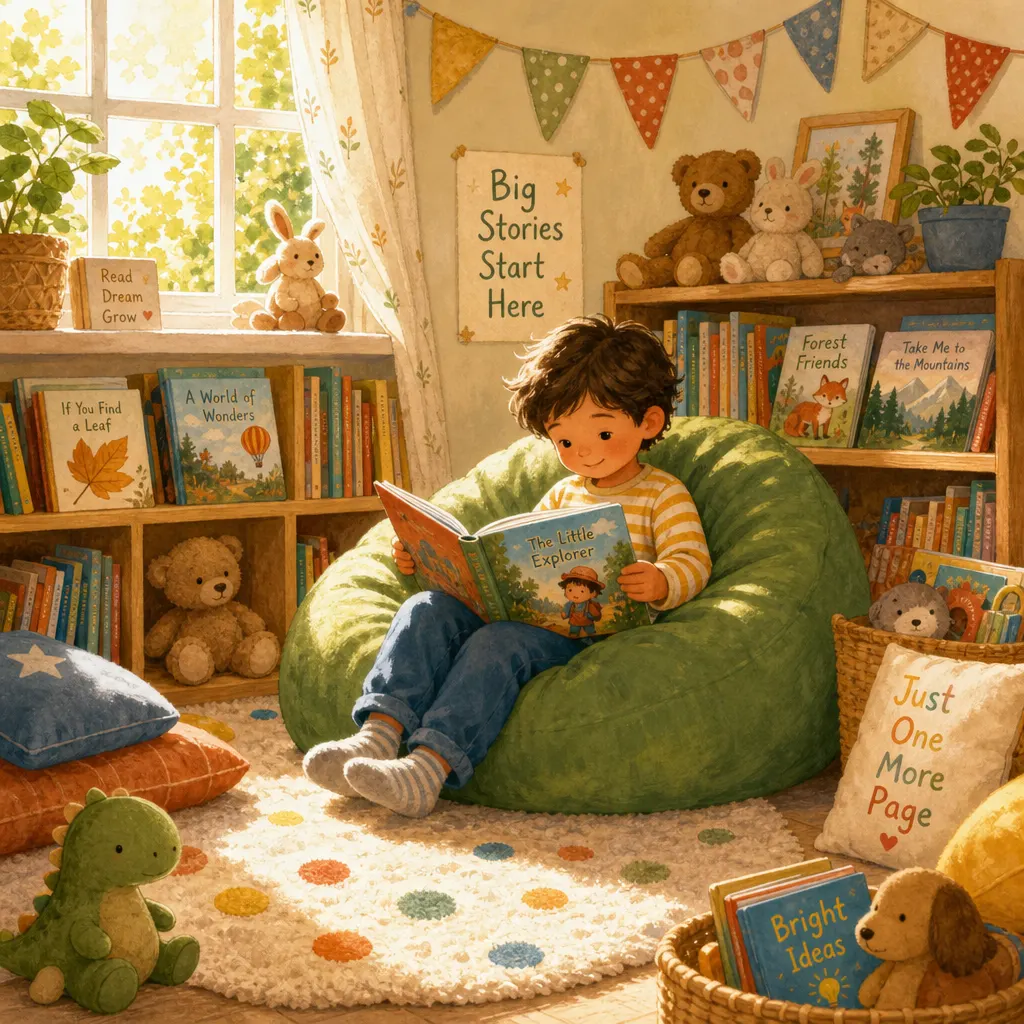
A cozy, dedicated reading spot also helps more than you'd think. A kids' floor reading cushion or chair signals to a child's brain: this is what we do here. It sounds small, but belonging somewhere while reading makes a real difference.
FAQ
What is the best first chapter book for a 6-year-old?
For most 6-year-olds just making the jump, Nate the Great, Mercy Watson, or Elephant & Piggie Big Readers are ideal starting points. They have large text, short chapters, and lots of illustration support to ease the transition. Let your child flip through before committing — if it looks intimidating, start with something slightly thinner.
How long should a chapter book be for an early reader?
For true beginners, aim for books under 80–100 pages with large font (14pt or bigger) and at least some illustrations per chapter. As confidence builds over a few months, you can gradually move up to longer titles like Magic Tree House (around 100–120 pages per book).
What if my child gets bored mid-series and wants to quit?
Let them quit — no guilt. Series commitment is an adult concept. If your kid finishes books 1 through 3 and wants to try something completely different, that's a win, not a failure. Finishing three books in a row is the habit you're building. The series will still be there if they circle back.