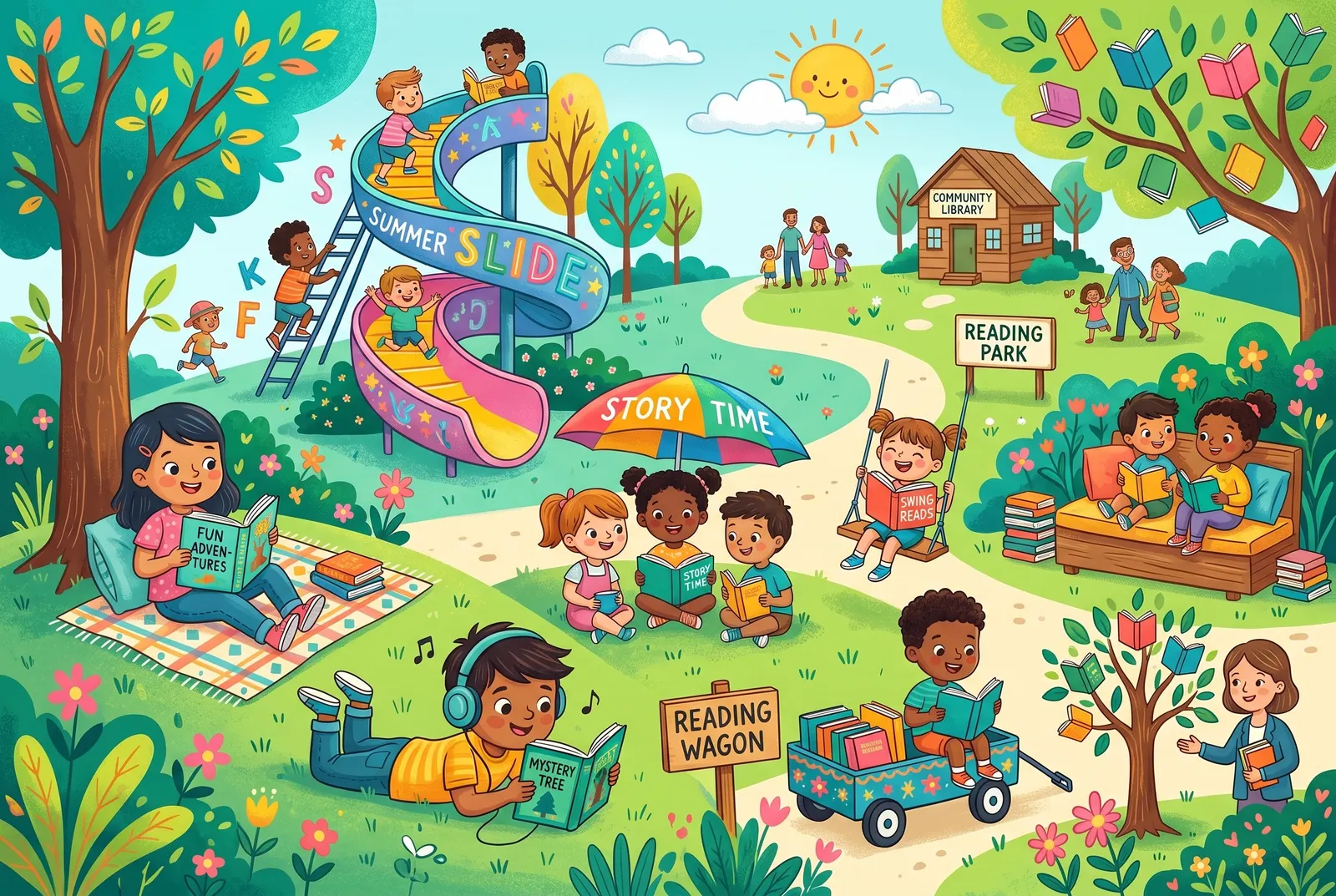
The school year ends, the backpacks are tossed aside, and a glorious summer stretches out ahead. But for many parents, a little worry creeps in alongside the excitement: the dreaded "summer slide." How do we keep our kids' reading skills sharp without turning summer into a chore?
This post contains affiliate links. We may earn a small commission at no extra cost to you. TL;DR: To prevent the summer slide in reading, make reading a low-pressure, joyful part of your summer routine. Visit the library weekly, let kids choose their own books, listen to audiobooks on the go, and connect stories to fun, real-world activities and crafts.The secret isn't about worksheets or flashcards. It's about weaving stories into the fabric of your summer adventures, making reading a source of fun and connection, not just another task.
1. Make the Library Your Summer Hub
Think of the library as your free, air-conditioned secret weapon against the summer slide. Many libraries have fantastic summer reading programs with prizes that can be a huge motivator for kids.
The Power of Choice
Let your child have complete freedom to choose their books. Graphic novels, silly joke books, non-fiction about dinosaurs—it all counts! When kids have ownership over what they read, their engagement skyrockets. This sense of autonomy is a cornerstone of raising a reader without screens.
2. Embrace the Magic of Audiobooks
Audiobooks are a game-changer for summer. They're perfect for road trips, quiet afternoon downtime, or listening while building LEGOs.
Listening Builds Literacy
Listening to a well-narrated story develops vocabulary, comprehension, and listening skills. It also exposes kids to stories that might be above their current reading level, introducing them to more complex plots and characters. A subscription to Epic! offers a massive library of digital books and audiobooks for kids.
3. Create a "Booknic" Tradition
Combine reading with a picnic! Pack a blanket, some snacks, and a tote bag full of library books, and head to a local park or even just your backyard. Reading outside makes it feel like a special adventure, not a school assignment. A sturdy, fun kids' tote bag can make carrying their library haul part of the fun.
4. Connect Books to Real-Life Adventures
Bring stories to life by connecting them to your summer plans.
- Going to the beach? Read a book about ocean animals first.
- Visiting a farm? Find stories about farm life.
- Camping? Pack some spooky (or silly) campfire storybooks.
This strategy shows kids that reading is a bridge to understanding the world around them. For more ideas on this, the experts at Scholastic have a great parent resource page full of activities.
5. Get Crafty with Story-Inspired Art
After reading a book, extend the fun with a simple art project. It doesn't have to be complicated!
- Draw your favorite character.
- Build a scene out of clay or play-doh.
- Make simple stick puppets to retell the story.
A basic set of washable paints and paper is all you need to get started. This helps kids engage with the story on a deeper level.
6. The 20-Minute-a-Day "Rule" (That's Not a Rule)
Aim for about 20 minutes of reading each day, but be flexible. The goal is consistency, not perfection. Frame it as "cozy reading time" rather than a chore. Maybe it's right after breakfast or before bed. And remember, reading to them counts! Snuggling up with a book together is one of the best parts of summer.
7. Let Them See You Read
Be a reading role model. Let your kids see you enjoying a book, magazine, or even a novel on a Kindle Paperwhite. When they see that reading is a relaxing and enjoyable activity for adults, they're more likely to view it that way themselves.
By making reading a light and joyful part of your summer rhythm, you'll not only stop the summer slide—you'll be strengthening their love of stories for life.
FAQ
H3: Do graphic novels "count" as real reading?
Absolutely! Graphic novels are fantastic for visual learners and reluctant readers. They build vocabulary, visual literacy, and reading comprehension. Any reading that gets a child excited about stories is a huge win.
H3: What if my child refuses to read?
Don't turn it into a battle. Take the pressure off. Focus on fun, book-adjacent activities like audiobooks, story-based crafts, or just telling stories to each other. Re-introduce books in a low-stakes way, like leaving an interesting-looking one on the coffee table.
H3: How can I help a child who struggles with reading?
Summer is a great time to read aloud to them without any pressure. This allows them to enjoy a good story and build vocabulary without the stress of decoding words. Also, look for "high-low" books—books with high-interest topics at a lower reading level. Your local children's librarian is an amazing resource for finding these.