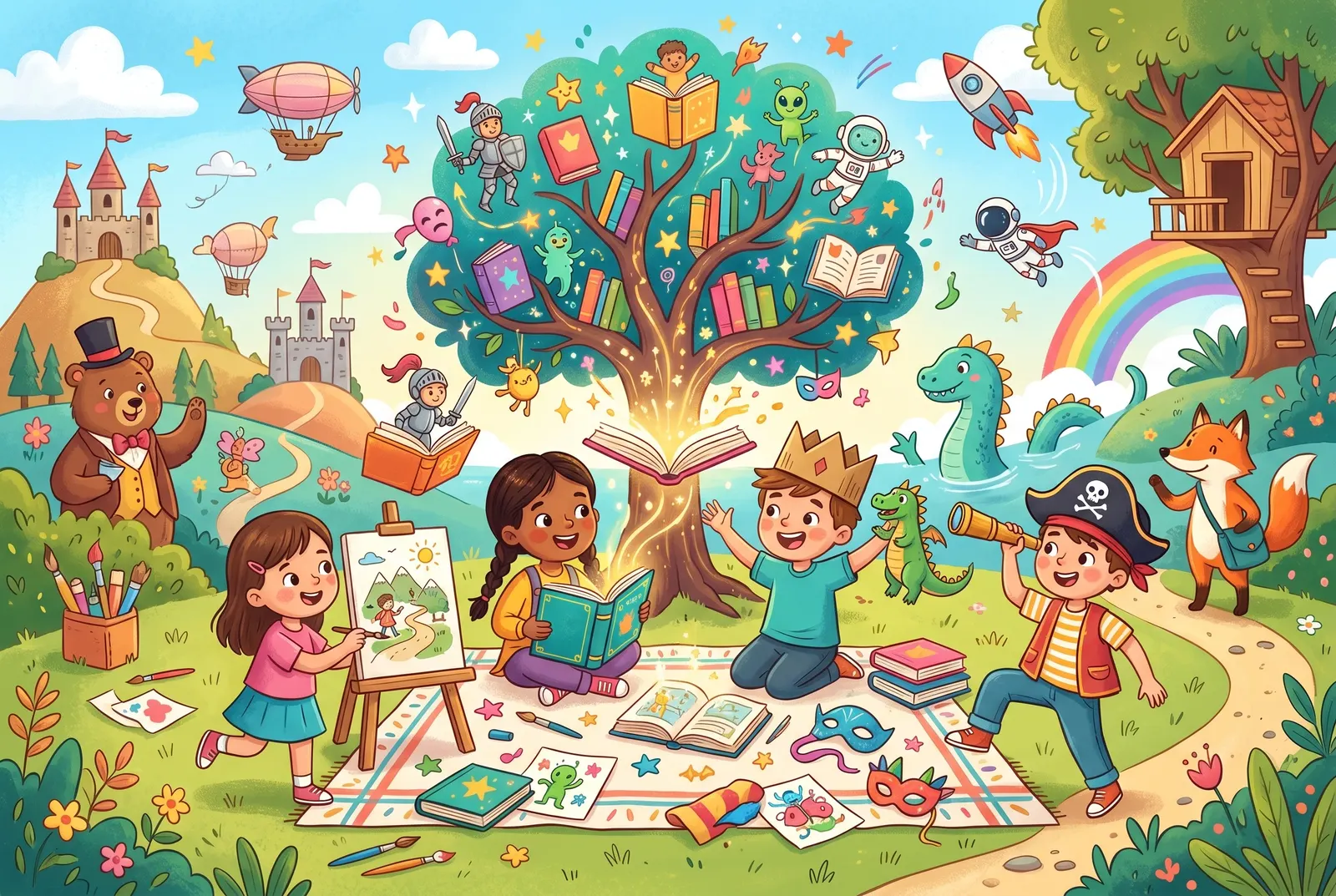
Ever feel like you're stuck in a loop of "How was school today?" "Fine."? Unlocking the amazing world inside your child's head is easier than you think. You don't need elaborate scripts or expensive toys—just a little spark. Creative storytelling is a powerful tool for connection and learning, helping kids build confidence, vocabulary, and empathy.
This post contains affiliate links. We may earn a small commission at no extra cost to you. TL;DR: To get your child started with storytelling, use simple, open-ended prompts. Try "What if..." scenarios, create stories from random objects, use picture cards, build a story one sentence at a time, or have them narrate their own drawings. The goal is to make it a fun, low-pressure game.These simple games can turn a boring car ride or a waiting room visit into an unforgettable adventure, all while building crucial oral language skills.
1. The "What If..." Game
This is the ultimate imagination-starter and requires zero props. All you have to do is ask a curious question and see where their mind takes it.
Spark the Story
Start with a simple, silly prompt:
- "What if our dog could talk for a day? What would he say?"
- "What if you found a key that could open any door in the world?"
- "What if it started raining spaghetti and meatballs?"
The magic is in having no right or wrong answers. It encourages creative thinking and problem-solving. For more ideas on sparking creativity, check out this guide from Scholastic's parent resources.
2. The Bag of Treasures
This turns random household objects into the main characters of an epic tale. It’s one of the best family storytelling activities because everyone can play.
How to Play
Grab a tote bag and have your child collect 3-5 small, random items. A leaf, a toy car, a crayon, a sock—anything goes! Pull them out one by one, and that object must become part of the story. This teaches kids to think on their feet and connect unrelated ideas, a key part of creative thinking. A great tool for this kind of game are Rory's Story Cubes, which provide endless visual prompts.
3. Draw and Tell
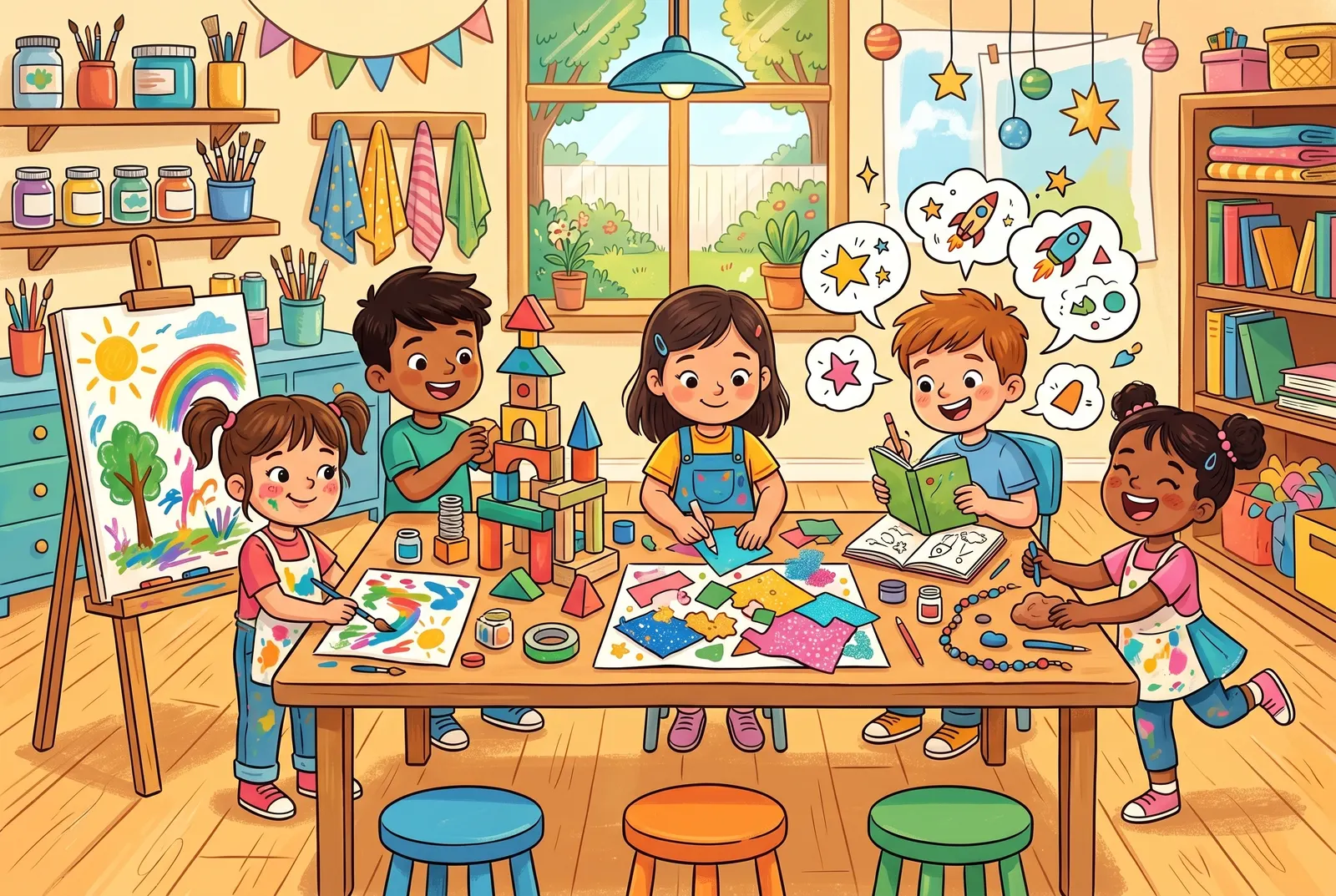
For kids who are more visual or love to draw, this prompt connects their art to their words. It's a fantastic way to practice both storytelling and fine motor skills.
From Page to Stage
Ask your child to draw anything they want—a monster, a magical tree, a spaceship. When they're done, ask them questions about their creation.
- "What is this character's name?"
- "Where do they live?"
- "What adventure are they going on today?"
This values their art as a starting point for a deeper narrative. Keep a dedicated kids' drawing journal and some colorful pens handy to capture these amazing ideas.
4. One Sentence at a Time
This collaborative game is perfect for groups, whether it's the whole family at the dinner table or during a playdate. It’s a hilarious way to build a story together.
Build a Story Together
One person starts with a single sentence, like "Once upon a time, there was a purple squirrel who loved to dance." The next person adds the next sentence, and so on. The story will take wonderfully weird and unexpected turns, which is all part of the fun! This teaches kids about story structure (beginning, middle, end) in a playful, organic way.
5. Narrate the World
Turn your child into the narrator of their own life. This prompt helps them see the magic and stories in everyday routines.
Be the Announcer
Encourage them to be a sports announcer for their LEGO building session or a nature documentarian describing the bugs in the backyard. You can model it for them first. "Here we see the mighty builder, carefully placing the red block on the tower. What a risky move!" This simple shift in perspective makes mundane moments feel exciting and builds rich descriptive vocabulary.
For more structured learning, apps like Khan Academy Kids have wonderful story-based activities that are both educational and fun, making it a great choice for supplemental screen time.
FAQ
H3: My child says "I don't know" to every prompt. What should I do?
Start the story for them! Give them the first two or three sentences and then say, "I'm stuck, what do you think happens next?" Sometimes, a blank page is intimidating. Giving them a little momentum is all they need.
H3: At what age can we start these storytelling games?
You can start as soon as they're talking in sentences, around age 2 or 3. The stories will be simple at first, and that's perfect! The goal at that age is just to play with words and ideas. As they grow, the complexity and length of the stories will naturally increase.
H3: Should I write down the stories they tell me?
Absolutely! It shows them that their words have value and are worth preserving. You can write them down in a special notebook, or even record them on your phone. They will love hearing their own stories read back to them later.