If the words "math homework" send your kid running in the opposite direction, you're not alone. But here's the thing: kids who struggle with worksheets often thrive when math shows up in a game, a recipe, or a silly challenge on the kitchen floor. The secret isn't more drilling—it's more playing.
This post contains affiliate links. We may earn a small commission at no extra cost to you. Quick answer: The best math games for kids at home use everyday items and natural curiosity. Think card games, counting snacks, measuring ingredients, and board games with numbers. When math feels like a game, kids practice without realizing it—and that's where the real learning happens.These activities work for kids ages 3–10 and don't require any special supplies. Let's dig in.
Why Play-Based Math Actually Works
There's solid research behind this. The National Council of Teachers of Mathematics has long supported game-based learning as a way to build number sense, problem-solving, and confidence — especially in early childhood.
The "I hate math" problem starts early
When kids only experience math as tests and worksheets, they start to believe they're either "math people" or they're not. Games flip that script. Winning a card game or figuring out how to share 7 cookies equally between 2 friends is math — and it feels like a win, not a failure.
Pair this approach with hands-on STEM exploration (check out our guide to easy science experiments at home) and you've got a recipe for curious, confident learners.
Card and Dice Games That Sneak in Real Math
You probably already have a deck of cards or some dice. That's all you need for several genuinely great math games for kids.
War (With a Math Twist)
Classic War is already math — comparing numbers. Amp it up by having kids add two cards together instead of playing one. Whoever has the higher sum wins both cards. This works beautifully for kids ages 5–8.
Bonus: Try Subtraction War for a harder challenge. Each player flips two cards, subtracts the smaller from the larger, and the highest difference wins. Roll and Race is another favorite. Each player rolls two dice, adds the numbers, and moves a token that many spaces on a homemade number line. First to 20 wins. Simple, fast, surprisingly compelling.For a beautiful ready-made option, Sum Swamp is a board game that covers addition and subtraction in a swampy adventure format that younger kids absolutely love.
Kitchen Math: The Most Practical Classroom
The kitchen is the best math classroom in your house, and it's already set up.
Measure, pour, count, divide
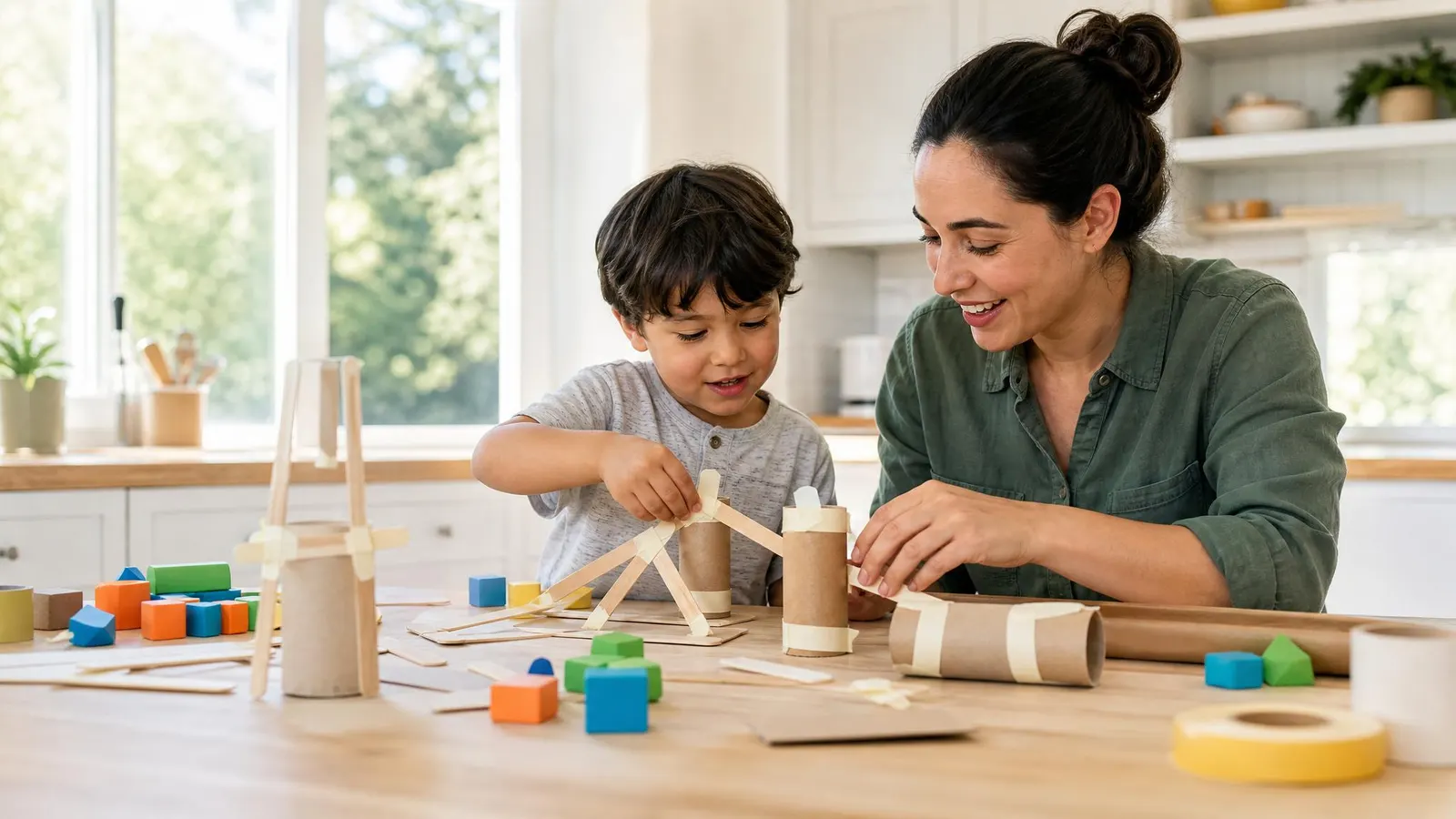
Baking is basically applied fractions. Let your child measure out ½ cup of flour, double a recipe, or figure out how to split a dozen muffins between four people. These are real-world math problems that matter to them because there's a muffin at the end.
Even younger kids (ages 3–5) can count out 10 blueberries, sort M&Ms by color, or arrange crackers in rows. Ordinal numbers, patterns, sorting — it's all there, and it tastes good.
For a set of colorful, hands-on math manipulatives that work great at home and on the kitchen table, Learning Resources Math Cubes are a solid investment. Kids use them to build, count, and make patterns long before they touch a worksheet.
Board Games That Build Number Sense
Board games teach math concepts so naturally that kids often don't realize they're learning.
Best picks by age
- Ages 3–5: Zingo 1-2-3 (number recognition), Hi Ho Cherry-O (counting and subtraction)
- Ages 5–8: Sequence for Kids (strategy + numbers), Zingo! 1-2-3
- Ages 7–10: Math Bingo, Prime Climb (for kids who are ready for multiplication)
The key is keeping the game light and fun. Don't correct every mistake in the moment — let the game do the teaching. You can circle back after if you want to explore a concept further.
Everyday Math Moments (No Setup Required)
You don't always need a game. Math hides everywhere in daily life, and pointing it out takes zero prep.
Spot-the-math habit
Make it a habit to notice math together. How many red cars do you see on the drive to the grocery store? If we have 6 eggs and we need 8, how many more do we need to buy? What time does it say on the microwave, and how many minutes until dinner?
These tiny conversations add up to enormous gains in number sense over time. It's not tutoring — it's just talking.
For kids who want a little more structure but still love the game format, Khan Academy Kids is completely free and does a genuinely great job making math feel like a series of fun challenges rather than lessons. No shame in using a screen when it's this well-designed.
Making It Stick: Tips for Parents
A few things that make all the difference:
Let them be wrong without drama. Math confidence is built through trying, not through always being right. Celebrate the attempt. Play alongside them. Kids love when grown-ups are genuinely in the game — not just watching. Keep sessions short. 10–15 minutes of engaged math play is worth more than an hour of reluctant worksheet time. Follow their interest. If your kid loves dinosaurs, count dinosaur toys. If they're into baking, do kitchen math. Meeting them where they are is the whole game.The goal isn't to raise a mathematician (though that would be cool). It's to raise a kid who doesn't flinch when numbers show up — and who knows, deep down, that they can figure it out.
FAQ
What age can kids start playing math games at home?
You can start with very simple counting and sorting games as early as age 2. Board games and card games with basic addition typically suit ages 4 and up. Scale the complexity to your child's comfort level — the goal is always fun first.
How often should we play math games?
A few times a week is plenty. Even 10–15 minutes of a card game or kitchen counting adds up significantly over a school year. Consistency matters more than duration.
My child gets frustrated quickly. What should I do?
Lower the stakes and shorten the game. Frustration usually means the activity is a bit too hard or has gone on too long. Try switching to something easier and ending on a win — that positive feeling is what brings them back next time.