If you've ever watched a cardboard box become a rocket ship or a blanket transform into a dragon's cave, you already know the magic of imaginative play. But what looks like goofing around is actually some of the most important work a preschooler can do.
This post contains affiliate links. We may earn a small commission at no extra cost to you. Quick answer: The best imaginative play ideas for preschoolers are simple setups that hand kids the steering wheel—a dress-up box, a pretend kitchen, a puppet theater made from a laundry basket. The activity matters less than the freedom. Give them props, step back, and let the story write itself.Research published by Harvard's Center on the Developing Child links pretend play directly to the development of executive function—the same mental skills behind focus, self-control, and problem-solving. In other words, playing "restaurant" today builds the brain architecture for high school calculus tomorrow.
Why Imaginative Play Is Non-Negotiable at Ages 3–5
Between ages three and five, a child's brain is wiring itself at a breathtaking pace. Pretend play specifically supports:
- Language development: Kids invent dialogue, negotiate roles, and narrate scenes out loud.
- Emotional regulation: Acting through tough scenarios ("the baby doll is sick") helps children process feelings safely.
- Social skills: Playing alongside or with others teaches turn-taking, empathy, and conflict resolution.
- Creativity and divergent thinking: There's no wrong answer when a spoon becomes a magic wand.
The best part? You don't need to spend a dollar. The setups below can be built from stuff already in your home.
10 Imaginative Play Ideas to Try This Week
1. The Dress-Up Bin
Raid the coat closet and donate old Halloween costumes into one big bin. Old hats, scarves, superhero capes, a nurse's smock from a thrift store—anything goes. A rotating dress-up bin keeps the novelty alive for months. Add a full-length unbreakable mirror nearby so they can admire their character in full glory.
2. Pretend Kitchen and Grocery Store
A toy kitchen is a classic for good reason—it sparks hours of role-play about family life, restaurants, and cooking. If you don't have one, a card table with "shelves" made from stacked cereal boxes works perfectly. Old cans, plastic containers, and a notepad for "orders" complete the setup. The KidKraft Ultimate Corner Play Kitchen is a perennial favorite if you're looking to invest in one piece.
3. Puppet Theater
Cut a large hole in the front of a cardboard box and you have a puppet stage. Sock puppets, finger puppets, or stuffed animals all work as cast members. The cardboard proscenium is magical—it gives shy kids a "character" to hide behind and storytelling kids a stage for their biggest productions.
4. Doctor's Office
Print out a simple "patient chart," gather a toy stethoscope, and designate a stuffed animal as the very sick patient. This one is especially powerful for kids who are nervous about upcoming doctor visits—acting out the scenario in a safe context reduces real-world anxiety. A basic doctor's kit adds realism without much cost.
5. Indoor Camping
String a sheet over two chairs, toss in a sleeping bag and a flashlight, and you have a campsite. Bonus points for roasting imaginary marshmallows. This kind of small-world building nurtures narrative thinking—kids have to construct a whole story about where they are and what they're doing there.
6. Cardboard Box City
Collect a week's worth of Amazon boxes and set them loose in the living room with tape and markers. Kids will build houses, towers, tunnels, and shops. Label a "bank," a "bakery," and a "fire station" and watch a whole town come to life. Pairing this with washable markers makes cleanup guilt-free.
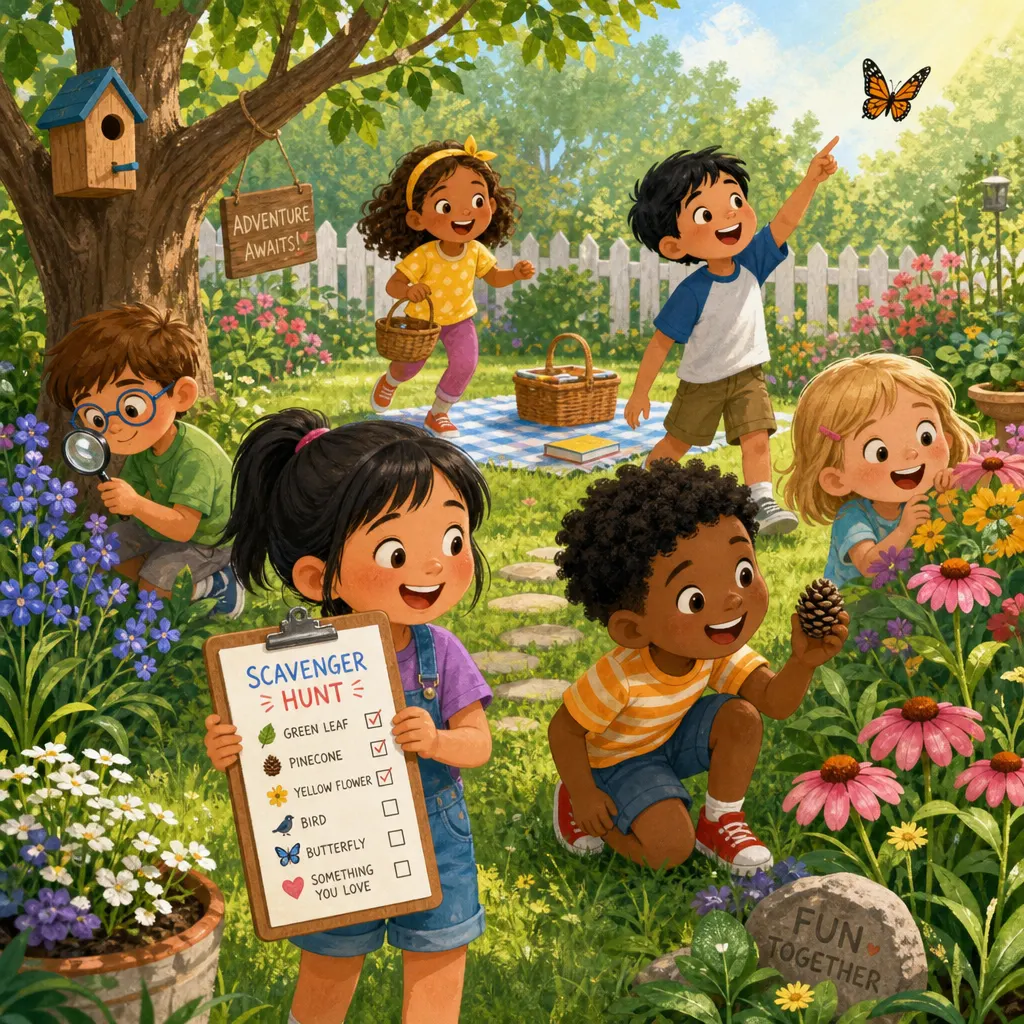
7. Nature Explorer Base Camp
Set up a tray of "samples"—leaves, rocks, pinecones, a jar of dirt. Add a magnifying glass and a simple field journal (blank notebook). Hand them a title: "Dr. Parker, Nature Scientist." Kids who are given a role in their play tend to sustain focus for far longer than those who are just told to "go play outside." This pairs beautifully with the hands-on science experiments on this site.
8. Post Office and Mail Carrier
Give them a stack of envelopes, stamps cut from construction paper, and a bag. Label "mailboxes" with family members' names on paper taped to doors. This play scenario is quietly brilliant—it builds letter recognition, narrative sequencing, and a sense of community roles. Kids who play post office often start writing "letters" before they formally learn to write.
9. Veterinary Clinic
Round up stuffed animals and set up a waiting room with chairs. Your preschooler is the vet; you're the worried pet owner. This scenario develops empathy, vocabulary (diagnosis, treatment, "she needs rest"), and nurturing behavior. It's also a great way to introduce the idea that caring for others is important work.
10. Construction Site
Blocks, cardboard tubes, tape, and a toy dump truck are all you need. Layer in some "blueprints" (blank paper they can "design" on) and hard hats made from paper plates. Spatial reasoning and early math—measurement, symmetry, estimation—get a serious workout here.
Tips for Supporting Without Taking Over
The instinct to jump in and direct is hard to resist. But research shows that child-led play yields the deepest benefits. A few ground rules:
- Watch before you intervene. Most "I'm bored" moments self-resolve within 90 seconds if you wait.
- Ask open questions. "What's happening in your story?" beats "Why don't you make the bear the doctor?"
- Resist the urge to make it educational. It already is. Trust the play.
For a great read on the science of play, the American Academy of Pediatrics has a landmark report called The Power of Play available on their website—worth bookmarking for any early childhood parent.
FAQ
How long should a preschooler's imaginative play session last?
There's no magic number, but aim to protect at least one uninterrupted block of 30–60 minutes per day. Longer sustained play deepens storytelling and problem-solving. Short, fragmented bursts are better than nothing, but consistency matters more than duration.
My child says "I don't know how to play." Is that normal?
Yes, especially for kids who've had a lot of structured activity or screen time. Start them off with a small prompt: "You're the chef today. I'm very hungry." Once they have a role and a tiny scenario, most kids find their footing quickly. Within a few sessions, they'll stop needing the prompt.
At what age does imaginative play typically peak?
Pretend play tends to bloom between ages 3 and 5 and remains rich through age 7 or 8. After that it often shifts into rule-based games and creative projects. Enjoy this window—it's genuinely one of the most delightful stages of childhood.
Imaginative play is free, endlessly renewable, and does more for a developing brain than almost any app or curriculum. Set the stage, hand over the props, and step back. You'll be amazed at the world they build.