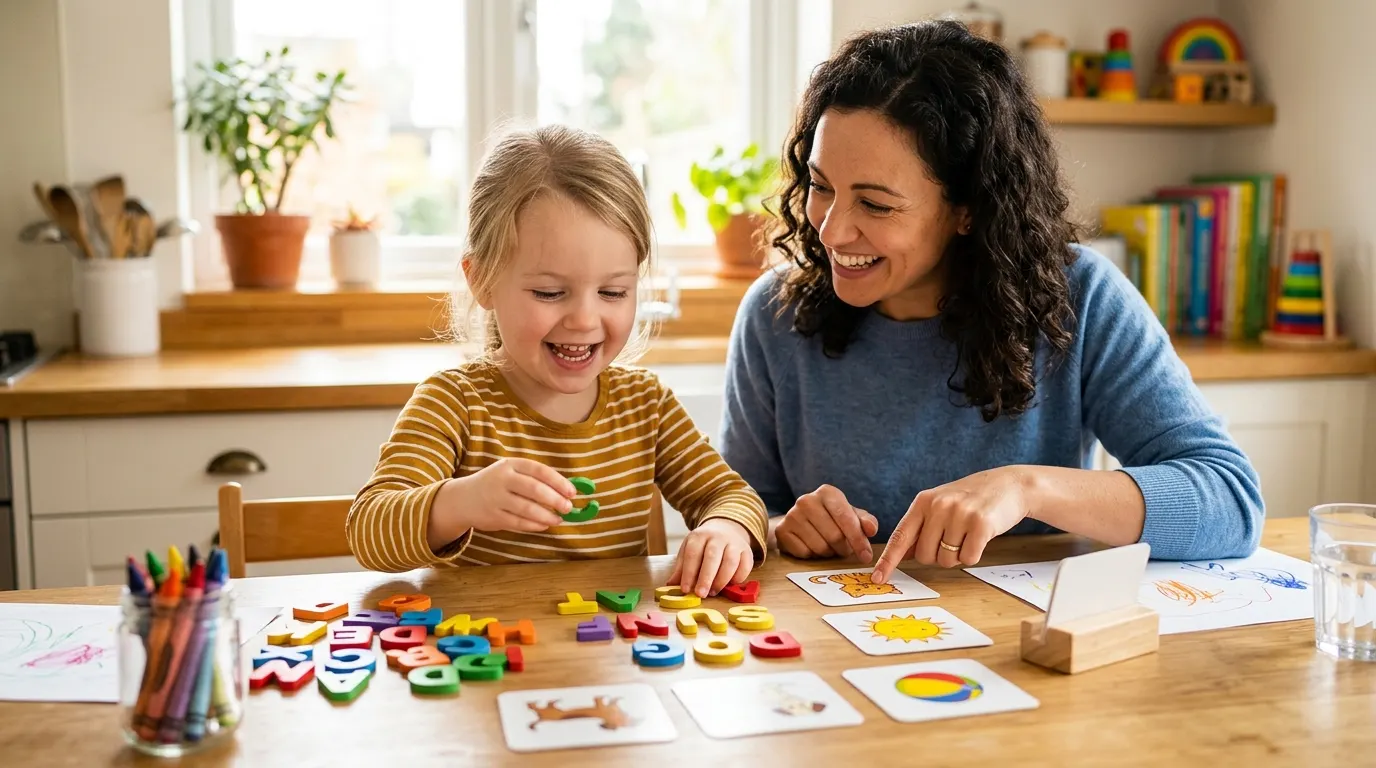
Kindergarten reading works best when it feels like play with a purpose. Quick answer: the best phonics games for kindergarten help kids hear sounds, match letters to sounds, blend short words, and feel successful fast. Start with five-minute games, use real objects or picture cards, and stop while your child still wants more. A few simple tools can turn phonics practice into a routine your child actually asks to repeat.
This post contains affiliate links. We may earn a small commission at no extra cost to you.The goal is not to rush a child into reading chapter books. It is to make the alphabetic code feel friendly. When kids can say, hear, move, and laugh their way through sounds, reading starts to feel less like guessing and more like solving a tiny puzzle.
Start With Sounds Before Worksheets
Before a child can read "map," they need to hear that it has three sounds: /m/ /a/ /p/. That listening skill is called phonemic awareness, and it is one of the strongest early reading foundations.
Try a sound hunt around the room. Pick one sound, like /b/, and ask your child to find things that begin with it: ball, book, basket, banana. If they bring you a pillow, do not turn it into a quiz. Say, "Pillow starts with /p/. Let's listen for /b/ again." Keep it light.
You can also play "mystery word." Stretch a simple word slowly: /s/ /u/ /n/. Ask your child to blend the sounds together. Use words they already know, like cat, dog, mom, sun, pig, and hat. This tiny game builds the exact muscle kids need for decoding.
For more research-backed early literacy guidance, Reading Rockets has a helpful overview of phonemic awareness.
Turn Letter Sounds Into Movement Games
Kindergarteners are not designed to sit still for long. Phonics gets easier when the body joins in.
Make a letter-sound hopscotch path with index cards. Put one letter on each card, spread them across the floor, and call out a sound. Your child hops to the matching letter. Once that is easy, call out a word and have them hop to the beginning sound.
Another favorite is "feed the sound monster." Draw a silly monster face on a paper bag, then gather small picture cards or toy objects. If the monster is hungry for /m/, your child feeds it moon, mouse, mug, and map. A pack of alphabet flash cards or beginning sounds cards makes this easy to rotate.
If your child is still working on letter recognition, pair these games with simple visual practice. Our letter recognition activities are a good next stop.
Practice Blending With Short, Winnable Words
Blending is where phonics starts to look like reading. Keep the words short and predictable at first: CVC words like sat, pin, hop, red, and bug.
Use magnetic letters on the fridge or a cookie sheet. Build "mat," then swap the first letter to make "sat," "cat," and "hat." This shows kids that one sound can change the whole word. Magnetic letters are especially useful because kids can move the sounds with their hands.
Try a "tap and slide" routine. Put one finger under each letter as your child says the sounds. Then slide a finger under the whole word and blend it together. Keep your voice calm and slow. If they guess wildly, return to the sounds instead of repeating "look at it" over and over.
A pocket chart can help too. Put a word family ending, like "-at," in the chart. Add different beginning letters to make bat, cat, hat, mat, and sat. A simple pocket chart for word building turns this into a quick morning or after-dinner game.
Keep Phonics Play Short and Consistent
Five focused minutes every day beats one long phonics session that ends in tears. Young kids learn through repetition, but repetition does not have to be boring. Rotate the format while keeping the skill familiar.
Monday can be sound hunt day. Tuesday can be letter hopscotch. Wednesday can be magnetic word building. Thursday can be a silly rhyming game. Friday can be a parent-and-child read-aloud where you pause for one easy sound search on each page.
The best sign that a game is working is not perfection. It is confidence. If your child starts noticing sounds in street signs, cereal boxes, or bedtime books, the practice is transferring into real life. That is the win.
FAQ
What phonics skills should a kindergartener know?
Most kindergarteners work on letter names, letter sounds, rhyming, beginning sounds, blending simple words, and recognizing a few common sight words. Kids develop at different speeds, so treat these as guideposts, not a race.
How long should phonics practice last each day?
Aim for five to ten minutes of playful practice. Stop sooner if your child is tired or frustrated. A short happy session is more valuable than a long one that makes reading feel stressful.
Are apps okay for phonics practice?
Good apps can help, but they should not replace talking, listening, and reading with a real person. Use apps as a small supplement, then balance them with hands-on games, picture books, and everyday sound play.